Belém, Lisbon: Riverfront Legacy of Portugal's Age of Discoveries
Along the western edge of Lisbon, where the Tagus River widens toward the Atlantic, Belém stands as a living monument to Portugal's Age of Discoveries. This historic district, once the departure point for explorers who charted unknown oceans, now welcomes millions of visitors who come to witness the architectural masterpieces funded by that maritime wealth. From the fortified Belém Tower that guarded Lisbon's harbor to the ornate Jerónimos Monastery where Vasco da Gama rests, Belém tells a story of ambition, artistry, and the audacious spirit that transformed a small European kingdom into a global empire. To walk these riverfront streets is to trace the footsteps of navigators, to stand where caravels once set sail, and to understand how a nation's golden age became permanently etched in stone.
The Age of Discoveries and Belém's Birth
Belém's transformation from a small fishing village to a symbol of Portuguese power began in the 15th century, when Prince Henry the Navigator established a school of navigation nearby. The district's strategic location at the mouth of the Tagus River made it the natural departure point for expeditions that would reshape world geography. In 1497, Vasco da Gama sailed from these shores to discover the sea route to India, returning two years later with spices that would fund Portugal's architectural ambitions. King Manuel I, flush with the wealth of these discoveries, commissioned monuments that would celebrate Portugal's maritime achievements for centuries.
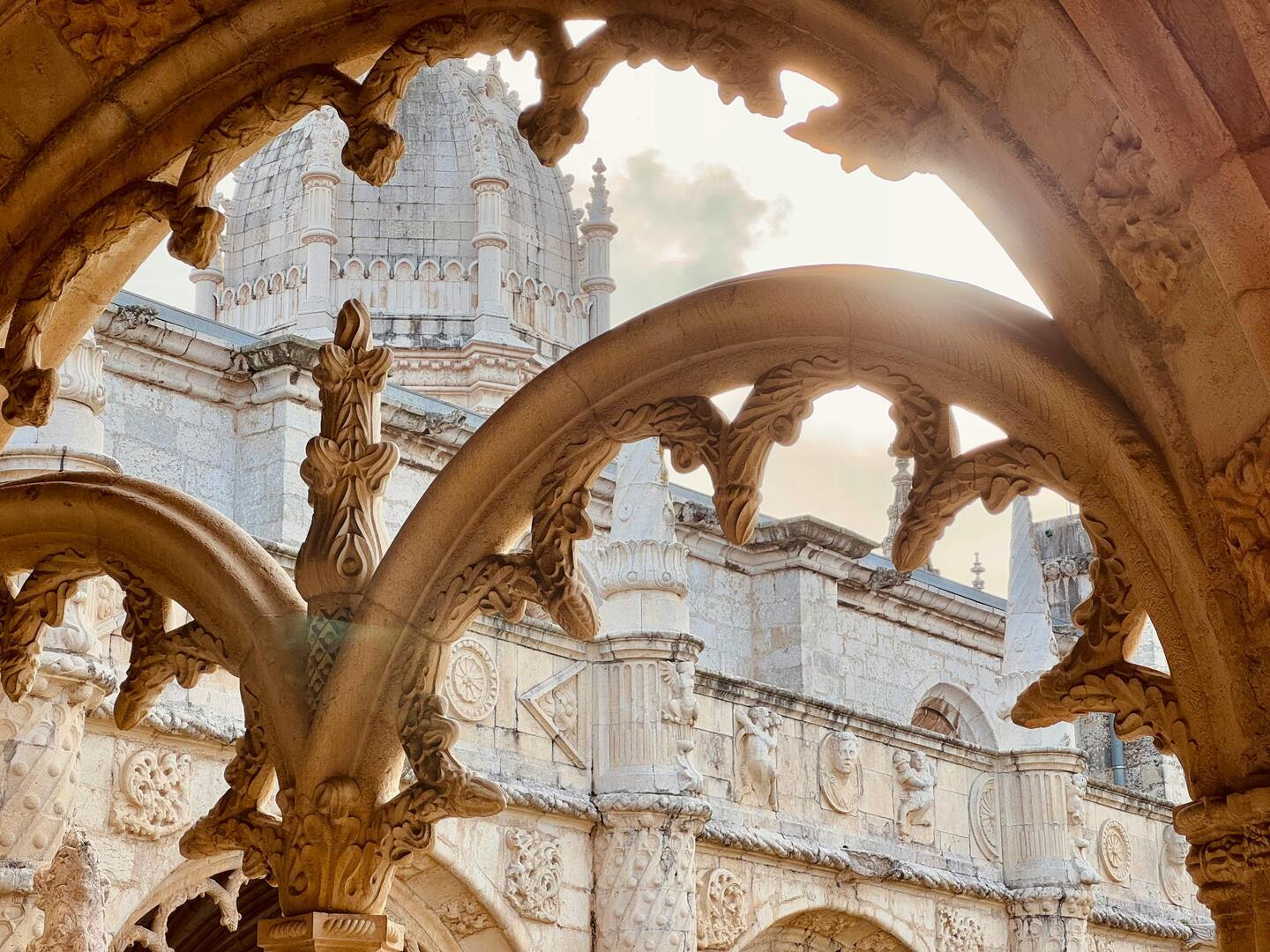
Construction of the Jerónimos Monastery began in 1501, funded by a tax on spices from the East. Architect Diogo de Boitaca designed the structure in the Manueline style—a uniquely Portuguese architectural language that blended late Gothic with maritime motifs: twisted ropes carved in stone, armillary spheres, anchors, and exotic flora. The monastery was built to house the Order of Saint Jerome, whose monks would pray for the souls of sailors embarking on dangerous voyages. The project took nearly a century to complete, with successive architects adding their own interpretations of Manueline grandeur.
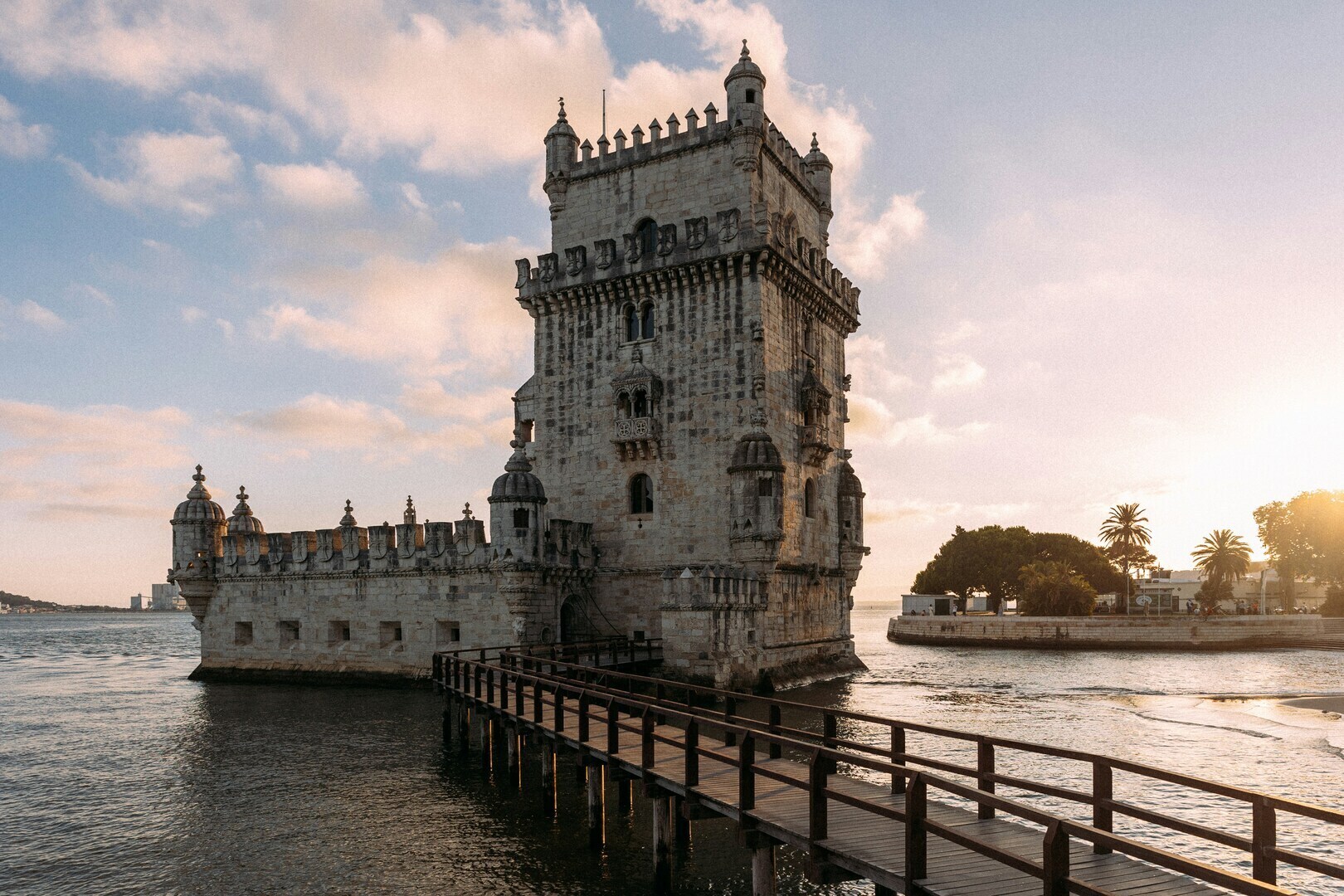
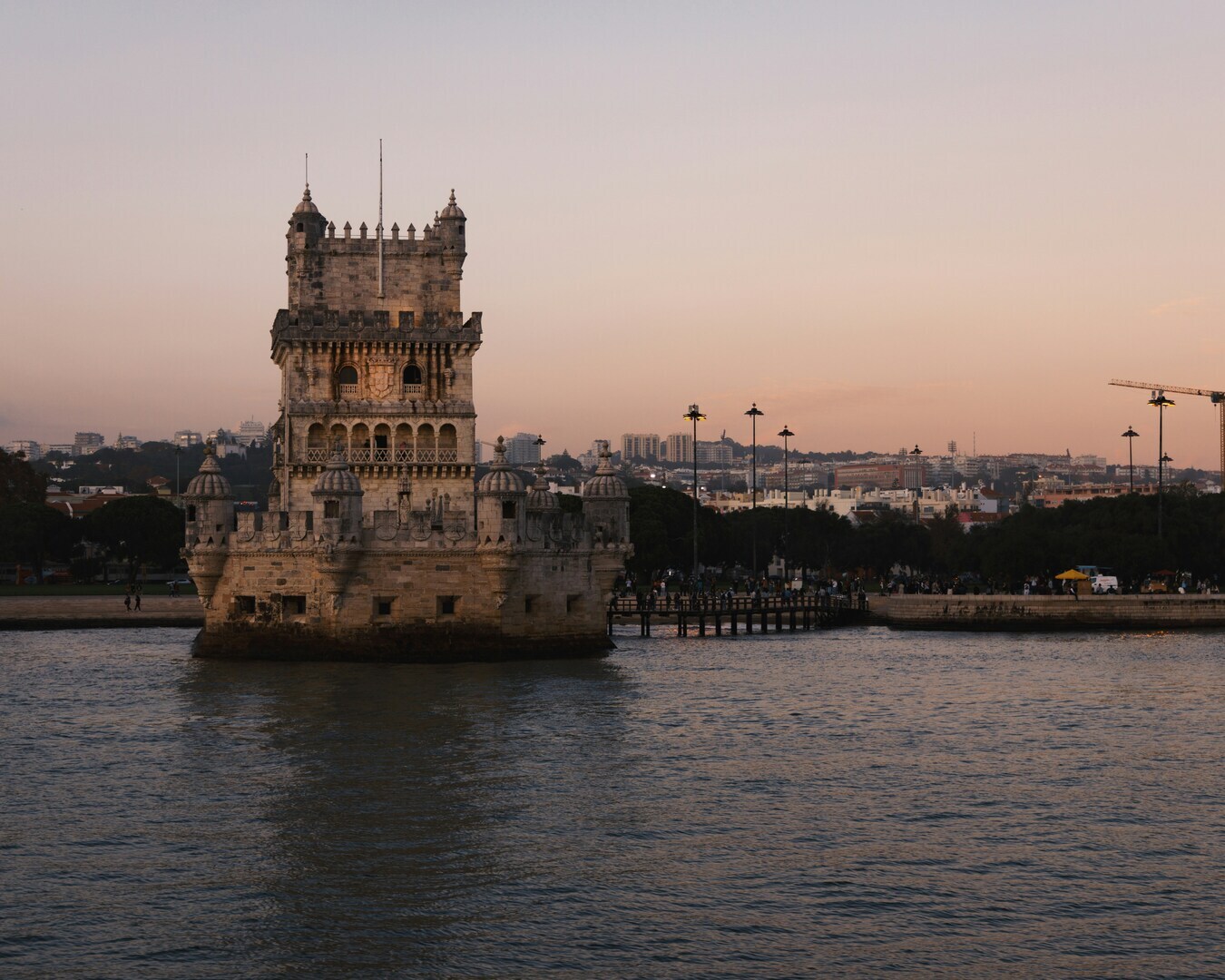
The Belém Tower, constructed between 1514 and 1519 under architect Francisco de Arruda, served both defensive and ceremonial purposes. Positioned on a small island in the Tagus (now connected to the shore), it guarded Lisbon's harbor while also functioning as a symbolic gateway—the last piece of Portugal explorers would see as they departed, the first upon their return. The tower's design reflects Portuguese encounters with North African architecture during military campaigns, incorporating Moorish-style balconies and watchtowers alongside traditional European fortification elements.
Key Historical Moments:
- 1497 – Vasco da Gama departs from Belém for India
- 1501 – Construction begins on Jerónimos Monastery
- 1514–1519 – Belém Tower constructed
- 1755 – Belém largely spared from the Great Lisbon Earthquake
- 1983 – Jerónimos Monastery and Belém Tower designated UNESCO World Heritage Sites
- 2016 – Major restoration of Belém Tower completed
Monuments and Masterpieces
The Jerónimos Monastery stands as one of Portugal's most significant architectural achievements. The church's nave spans 32 meters wide—unprecedented for its time—supported by six slender columns that create an impression of weightless grandeur. The south portal, designed by João de Castilho, features over 40 figures carved in stone, including King Manuel I and his wife, Queen Maria. Inside, the tombs of Vasco da Gama and poet Luís de Camões rest in the lower choir, their final resting places marked by elaborate stonework that reflects their contributions to Portuguese history and culture.
The Belém Tower rises 30 meters above the Tagus, its four-story structure originally accessible only by boat. The tower's ground floor, the Governor's Hall, once housed artillery. Above, the King's Hall features a Renaissance loggia with views across the river. The top floor, the Audience Hall, contains a small chapel. The tower's exterior displays Manueline carvings: the cross of the Order of Christ, armillary spheres symbolizing Portugal's global reach, and naturalistic elements like rhinoceros gargoyles—likely inspired by a rhinoceros sent to King Manuel I from India, the first seen in Europe since Roman times.
The Monument to the Discoveries (Padrão dos Descobrimentos), built in 1960 to commemorate the 500th anniversary of Henry the Navigator's death, stands 52 meters tall. The monument's design resembles a caravel's prow, with Henry the Navigator at the helm. Along the sides, 33 figures represent key personalities of the Age of Discoveries: explorers, cartographers, missionaries, and scientists. Inside, an elevator and stairs lead to an observation deck offering panoramic views of Belém, the Tagus, and the 50-meter-wide marble compass rose embedded in the pavement below, a gift from South Africa in 1960.
Preservation and Modern Relevance
The Great Lisbon Earthquake of 1755, which destroyed much of central Lisbon, largely spared Belém. The district's distance from the epicenter and its solid construction meant that while the city center lay in ruins, Belém's monuments survived relatively intact. This preservation allowed later generations to experience the Manueline style in its original context, making Belém a unique window into 16th-century Portuguese architecture. The 1983 UNESCO World Heritage designation recognized not just individual monuments but the entire cultural landscape—the relationship between the buildings, the river, and the historical narrative they collectively represent.
Recent years have seen significant restoration efforts. The Belém Tower underwent a comprehensive renovation completed in 2016, addressing structural concerns and improving visitor access. The Jerónimos Monastery continues to serve multiple functions: the church remains active for worship, the cloisters house the Maritime Museum and the National Archaeology Museum, and the former refectory contains the tomb of Fernando Pessoa, Portugal's most celebrated 20th-century poet. This layered use—sacred space, museum, and memorial—demonstrates how historical monuments adapt to contemporary needs while maintaining their essential character.
Belém's cultural significance extends beyond its monuments. The district hosts the Centro Cultural de Belém, a modern arts complex opened in 1993 that houses contemporary exhibitions, concerts, and performances. This juxtaposition—16th-century stone carvings alongside cutting-edge installations—creates a dialogue between Portugal's past and present. The annual Belém Cultural Festival draws international artists, while the nearby National Coach Museum, relocated to a striking modern building in 2015, showcases one of the world's finest collections of royal carriages, bridging the gap between the Age of Discoveries and the opulent court life that followed.
Experiencing Belém
Begin your visit early—Belém's monuments attract crowds, and arriving before 10 a.m. offers quieter moments to appreciate the architecture. Start at the Jerónimos Monastery, where morning light illuminates the south portal's intricate carvings. Inside, take time in the church's nave, where the absence of traditional supporting columns creates an almost ethereal sense of space. The cloisters, with their two-story arcades and maritime-themed decorations, reward slow observation—notice how each capital tells a different story through stone.
No visit to Belém is complete without tasting Pastéis de Belém, the original Portuguese custard tart. The Antiga Confeitaria de Belém, operating since 1837 near the monastery, uses a secret recipe passed down through generations. The warm pastries, dusted with cinnamon and powdered sugar, pair perfectly with a bica (Portuguese espresso). Arrive mid-morning or late afternoon to avoid the longest queues, though even during peak hours, the wait moves quickly—the bakery's efficient service is itself a testament to Portuguese hospitality.
The Belém Tower requires advance planning. Visitor numbers are limited, and tickets often sell out, especially during summer. If you secure entry, climb to the top floor for views across the Tagus—on clear days, you can see the 25 de Abril Bridge and the Cristo Rei statue. The tower's interior, while compact, reveals its defensive purpose: narrow windows designed for archers, a dungeon that once held prisoners, and the rooftop terrace where cannons once stood guard. For those unable to enter, the exterior alone justifies the visit—the Manueline carvings visible from the surrounding walkway tell the story of Portugal's maritime ambitions.

A Day in Belém
Imagine arriving in Belém on a crisp morning, the Tagus River reflecting the soft light of early day. You might begin at the Jardim Afonso de Albuquerque, a peaceful garden that offers your first glimpse of the district's monuments across the street. From here, the Monument to the Discoveries rises like a ship's prow, and you understand immediately why this place mattered—the river opens toward the ocean, and you can almost see the caravels that once departed from these shores.
A gentle walk along the riverfront leads to the Belém Tower, where you spend time examining the Manueline carvings up close. The tower's position—originally on an island, now connected by a causeway—speaks to its dual role as fortress and symbol. You might continue to the Jerónimos Monastery, entering through the south portal where stone figures seem to watch your approach. Inside, the scale of the nave surprises—those six columns supporting such width, the vaulted ceiling creating a sense of infinite space. In the cloisters, you move slowly, noticing how maritime motifs appear in unexpected places: ropes twisted into columns, sea monsters carved into capitals.
By midday, the queue at Antiga Confeitaria de Belém has formed, but you join it anyway—this is part of the experience. Inside, the tiled walls and the bustle of the bakery create an atmosphere that feels both historic and immediate. You order pastéis and coffee, finding a table where you can watch the constant flow of customers. The pastry arrives warm, the custard still slightly runny, the pastry shell flaky and golden. This moment—sitting in a 19th-century bakery, eating a recipe that predates the building itself, surrounded by people from around the world—captures Belém's essence: history that remains alive, traditions that continue to matter.
The afternoon might include the Maritime Museum, where model ships and navigational instruments bring the Age of Discoveries into focus, or the National Coach Museum, where opulent carriages demonstrate the wealth that exploration brought to Portugal. As evening approaches, you return to the riverfront. The Monument to the Discoveries catches the last light, and you consider ascending to the observation deck for one final view. Below, the compass rose embedded in the pavement points in all directions—a reminder that from this place, Portugal once looked outward, toward horizons that would redefine the known world.
"Belém is where Portugal's past meets its present—where stone carvings tell stories of exploration, and where those stories continue to inspire visitors from around the world."
Experience This Attraction With Our Tours
One Journey's Complete Belem Tour offers a carefully curated exploration of this historic district, designed to be both comprehensive and accessible. The tour begins at McDonald's Belem, where your guide welcomes you with warm Pastéis de Belém—the authentic Portuguese custard tarts from the original bakery. This isn't just a tasting; it's an introduction to a tradition that has defined Belém since 1837, setting the tone for a journey through Portugal's golden age.
The itinerary follows a flat, stable route that makes this the easiest walking tour in Lisbon, accessible to visitors of all mobility levels. Your guide leads you through the Jardim Afonso de Albuquerque, where you'll cross via an overpass offering spectacular views of the Tagus River and the district's monuments. At the Monument to the Discoveries, you'll learn about the explorers who shaped Portugal's maritime legacy, with optional access to the observation deck for panoramic views. The tour includes a 15-minute discovery stop at the Belém Tower, where you'll understand its role as both fortress and symbolic gateway to Lisbon.
The tour's centerpiece is the Jerónimos Monastery, where admission is included. Your guide provides detailed insights into the Manueline architecture, pointing out the maritime motifs carved into stone and explaining the historical significance of this UNESCO World Heritage Site. You'll visit the tombs of Vasco da Gama and Luís de Camões, understanding how these figures represent Portugal's achievements in exploration and literature. The tour concludes at the Centro Cultural de Belém, where your guide offers recommendations for contemporary art exhibits and activities you might enjoy after the tour.
Operating Tuesday through Sunday at 9:00 a.m., the two-hour experience balances structured guidance with time for personal exploration. The small group format ensures you can ask questions and engage with the history, while the flat route design means you can focus on the monuments rather than navigating challenging terrain. This tour recognizes that Belém's story is best understood through a combination of expert narration and personal observation—your guide provides context, but the stone carvings, the river views, and the taste of warm pastéis create their own impressions that linger long after the tour ends.
Is It Worth Visiting?
Without question. Belém represents one of Europe's most significant historical districts, where architecture, history, and culture converge in a way that feels both monumental and intimate. The UNESCO World Heritage designation recognizes not just individual buildings but the entire narrative—how Portugal's Age of Discoveries shaped global history, and how that legacy remains visible in stone carvings, river views, and the taste of a warm pastry. To visit Belém is to understand how a small European kingdom once looked outward, charting unknown oceans and returning with wealth that funded artistic achievements still admired five centuries later.
The district offers something for every traveler: architecture enthusiasts can spend hours examining Manueline details, history lovers can trace the footsteps of explorers, and those simply seeking a beautiful riverside walk will find Belém's gardens and monuments create an atmosphere of quiet grandeur. The accessibility of the main attractions—most visible from public spaces, with flat walking routes connecting key sites—makes Belém welcoming to visitors of all ages and mobility levels. Whether you spend a morning or a full day, Belém leaves an impression that extends beyond photographs: it's the feeling of standing where history happened, of understanding how exploration shaped a nation, and of recognizing that the same river that carried caravels to unknown continents now carries visitors who come to witness what that ambition created.
Traveler's Questions
How do I get to Belém from central Lisbon?
Belém is easily accessible by public transport. Tram 15 (E) runs from Praça da Figueira and other central locations directly to Belém, taking approximately 20–30 minutes. Bus routes 727, 728, and 729 also serve the district. Alternatively, take the train from Cais do Sodré station to Belém station, a journey of about 10 minutes. For those driving, parking is available but limited, especially during peak tourist season.
Do I need tickets in advance for the monuments?
For the Jerónimos Monastery, advance booking is highly recommended, especially during summer months when queues can exceed an hour. The Belém Tower has limited capacity and often sells out—booking online in advance is essential if you want to enter. The Monument to the Discoveries doesn't require advance tickets for exterior viewing, but the observation deck may have queues during peak times. Many visitors find that the exteriors of these monuments are impressive enough, and interior access, while rewarding, isn't essential to appreciate Belém's significance.
What are the best times to visit Belém?
Early morning (before 10 a.m.) offers the quietest experience and best lighting for photography. Mid-week visits tend to be less crowded than weekends. Summer months (June–August) see the highest visitor numbers, while spring and autumn provide pleasant weather with fewer crowds. The monuments are open year-round, though the Jerónimos Monastery closes on Mondays, January 1st, May 1st, and December 25th.
Is Belém accessible for visitors with mobility challenges?
Belém's main attractions are generally accessible, with flat walking routes connecting the key monuments. The Jerónimos Monastery has accessible entrances and elevators. The Belém Tower's interior involves narrow staircases and may be challenging for those with mobility limitations, though the exterior is fully viewable from accessible pathways. The Monument to the Discoveries has an elevator to the observation deck. Many visitors find that Belém's flat layout makes it one of Lisbon's most accessible historic districts.
How long should I plan to spend in Belém?
A minimum of half a day (3–4 hours) allows time to see the main monuments and enjoy Pastéis de Belém. A full day enables deeper exploration: visiting the Maritime Museum, the National Coach Museum, the Centro Cultural de Belém, and spending more time in the gardens. Many visitors find that Belém rewards a relaxed pace—rushing through the monuments means missing the details that make Manueline architecture so distinctive. Consider combining your visit with a guided tour to maximize understanding while ensuring you see the highlights efficiently.
For guided Belém experiences, monument access assistance, and tours that explore Lisbon's historic districts, contact our Tour Concierge at support@onejourneytours.com.