Montmartre: Where Paris Ascends Into Legend
High above the Seine, where the 18th arrondissement climbs 130 meters toward the sky, Montmartre rises as Paris's most storied hill. Its white-domed Sacré-Cœur Basilica commands the skyline, visible from across the city, while beneath that gleaming crown winds a labyrinth of cobblestone streets where artists once gathered in cheap studios, where the Moulin Rouge still spins its red windmill blades, where village charm persists against the metropolitan sprawl below. This is the butte that inspired Picasso and Renoir, that sheltered bohemians and martyrs, that transformed from sacred ground to artist colony to essential Parisian pilgrimage. To climb Montmartre is to ascend through layers of history, each turn revealing remnants of Roman temples, Belle Époque cabarets, and twentieth-century genius—a vertical journey through time compressed into steep staircases and sloping lanes.
Sacred Ground and Martyrs' Mount
Long before artists colonized its slopes, Montmartre held religious significance. The name itself sparks scholarly debate: Mons Martis (Mount of Mars) references ancient Roman temples dedicated to Mars and Mercury that crowned the summit during Gallo-Roman occupation. Archaeological excavations have unearthed 3rd-century coins and Roman bath vestiges from the 2nd century, confirming the hill's pre-Christian importance. Yet the more enduring etymology traces to Mons Martyrum—Mount of Martyrs—commemorating Saint Denis, Paris's first bishop, who was decapitated here around 250 AD under Roman persecution.
Legend holds that Denis picked up his severed head and walked north, preaching the entire way, before collapsing at the site that would become the Basilica of Saint-Denis. The 9th-century text Miracles of Saint-Denis, penned by Hilduin, abbot of Saint-Denis monastery, established this miraculous narrative and sanctified the hill. By 1134, King Louis VI built the church of Saint-Pierre de Montmartre on the summit, still standing today as one of Paris's oldest churches. Alongside it rose the Royal Abbey of Montmartre, a Benedictine monastery whose extensive grounds dominated the hilltop for centuries.
This sacred heritage culminated in another pivotal moment: on August 15, 1534, Ignatius of Loyola and six companions—including Francis Xavier—gathered in the Martyrium chapel on Rue Yvonne Le Tac to take vows of poverty, chastity, and pilgrimage to Jerusalem. This compact marked the founding of the Society of Jesus, the Jesuits, whose global influence would ripple far beyond Montmartre's slopes. The hill thus served as birthplace not merely to Parisian legend but to a religious order that would reshape Catholicism worldwide.
Montmartre at a Glance:
- Height: 130 meters (430 feet) above sea level
- Location: 18th arrondissement, northern Paris
- Historic district: 60 hectares established in 1995
- Metro access: Lines 2, 4, 12, 13; Funicular from Place Saint-Pierre
- Key landmarks: Sacré-Cœur Basilica, Place du Tertre, Moulin Rouge, Café des 2 Moulins
The Bohemian Golden Age
Montmartre's transformation from religious enclave to artistic haven accelerated in the late 19th century. Until 1860, the butte remained outside Paris's official boundaries—a separate commune with its own governance, lower rents, and exemption from the city's octroi taxes on wine. This independence attracted those seeking cheap lodging and creative freedom. Windmills dotted the hillside, grinding grain and pressing grapes from local vineyards. The neighborhood retained rustic character even as industrial Paris expanded below.
Annexation into Paris in 1860 didn't immediately erase this village atmosphere. By the 1880s, artists flocked to Montmartre's affordable studios. Pierre-Auguste Renoir painted Bal du moulin de la Galette (1876) depicting Sunday afternoon leisure at one of the hilltop's windmill dance halls. Vincent van Gogh lived on Rue Lepic with his brother Theo; his paintings captured Montmartre's windmills and vegetable gardens. Henri de Toulouse-Lautrec became synonymous with the district's nightlife, immortalizing Moulin Rouge dancers and cabaret performers in vivid posters that turned commercial art into high art.
The early 20th century brought Montmartre's legendary apex. Pablo Picasso arrived in 1904, settling into the Bateau-Lavoir, a ramshackle building at 13 Place Émile-Goudeau that housed studios for impoverished artists. Here Picasso painted Les Demoiselles d'Avignon (1907), the proto-Cubist masterwork that fractured perspective and redirected modern art's trajectory. Fellow tenants included Juan Gris, Amedeo Modigliani, and poets Max Jacob and Guillaume Apollinaire. The Bateau-Lavoir became ground zero for avant-garde experimentation—cheap rent and communal energy fostering radical innovation.
Montmartre also birthed modern cabaret. The Moulin Rouge, opened in 1889 as Paris's first electrically powered building, inaugurated the can-can as mass entertainment. Le Chat Noir pioneered the literary cabaret, blending poetry, music, and shadow puppet shows. Cabarets like Le Lapin Agile—still operating today—hosted Picasso, Modigliani, and poet Paul Verlaine. This was bohemia in its purest distillation: art, poverty, ambition, and absinthe mixing in gaslit rooms where tomorrow's masterpieces were conceived over cheap wine.
Sacré-Cœur: Monument of Redemption
While artists colonized Montmartre's lower slopes, the summit underwent its own transformation. The Sacré-Cœur Basilica, that radiant white presence dominating Paris's northern skyline, arose from political and religious turmoil. After France's defeat in the Franco-Prussian War and the violent suppression of the 1871 Paris Commune, Catholic leaders proposed a basilica dedicated to the Sacred Heart of Jesus—a monument of national penance and spiritual renewal.
Construction began in 1875 on the site of the former Abbey of Montmartre, destroyed during the Revolution. Architect Paul Abadie designed a Romano-Byzantine structure clad in Château-Landon limestone, a stone that whitens when exposed to rain, ensuring perpetual luminosity. The work spanned decades—the basilica was finally consecrated in 1919, after World War I's end. Its massive dome rises 83 meters, making Sacré-Cœur the second-highest point in Paris after the Eiffel Tower. Inside, one of the world's largest mosaics—Christ in Majesty—covers 480 square meters of apse ceiling, golden tesserae catching candlelight in shimmering waves.
Sacré-Cœur's presence sparked controversy. For leftist Parisians, it symbolized Catholic triumphalism erected on ground where Communards had died defending their radical republic. The basilica's political overtones couldn't be ignored—this was Church asserting authority over a secular, revolutionary city. Yet time has softened such readings. Today, Sacré-Cœur functions primarily as pilgrimage site and panoramic viewpoint. Perpetual adoration continues 24 hours daily in the basilica's crypt—an unbroken chain of prayer maintained since 1885. Visitors climb the dome's 300 steps for 360-degree Paris views stretching 50 kilometers on clear days.
Modern Montmartre: Tourism and Preservation
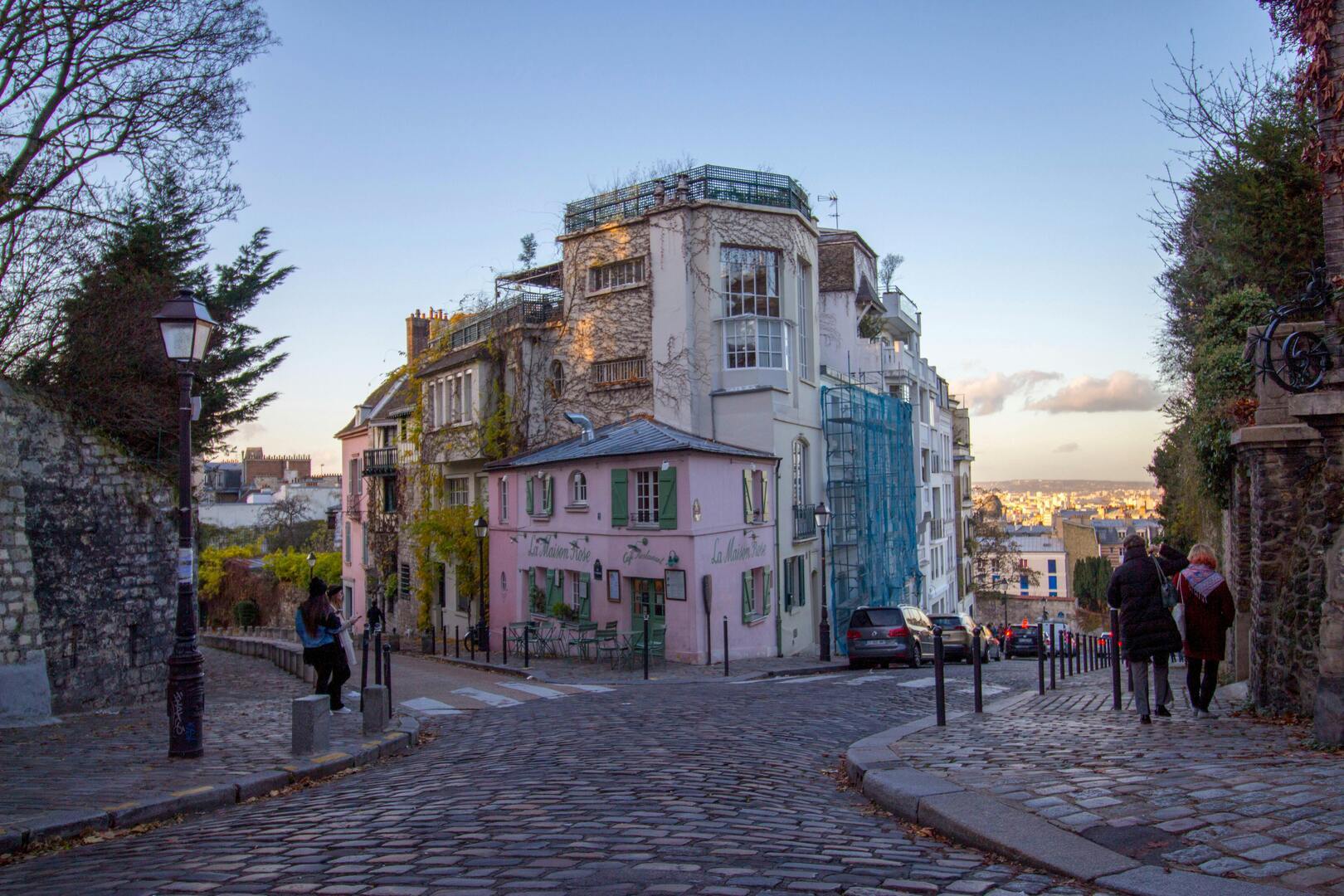
By mid-century, rising rents and gentrification pushed most artists elsewhere. Montmartre's bohemian era faded as tourism surged. The neighborhood's picturesque qualities—those same cobblestones and village lanes that once sheltered starving painters—now attract millions annually. Place du Tertre, the hilltop square where artists sold work since the Belle Époque, has become open-air market where portrait painters and caricaturists cater to tourists. Authenticity collides with commerce; spontaneous art-making gives way to calculated performance.
Yet remnants of old Montmartre persist for those willing to venture beyond main thoroughfares. The Musée de Montmartre, housed in the 17th-century Maison du Bel Air where Renoir once rented a studio, preserves the district's artistic legacy through paintings, posters, and period recreations. Its gardens offer tranquil respite, reconstructing the vegetation that inspired Impressionist canvases. Nearby, the Clos Montmartre—Paris's last functioning vineyard—produces roughly 1,500 bottles annually during October's harvest festival, maintaining agricultural tradition against urban encroachment.
In 1995, the City of Paris designated 60 hectares as a protected historic district, establishing height restrictions and architectural guidelines to preserve Montmartre's character. The Abbesses metro station retains one of Hector Guimard's original Art Nouveau entrances, its sinuous iron and glass canopy echoing the Belle Époque. The area's steep topography—those exhausting staircases and sloping streets—has inadvertently protected it from wholesale redevelopment, making extensive construction logistically difficult and economically prohibitive.
Films like Amélie (2001) reignited romantic associations, its whimsical protagonist working at Café des 2 Moulins and wandering Montmartre's photogenic backstreets. The film's global success brought fresh waves of cinematic pilgrims seeking the Paris of their imagination. Montmartre obliges, performing its role as timeless village even as chain stores and souvenir shops gradually infiltrate. The tension between preservation and commerce, authenticity and performance, defines contemporary Montmartre—a neighborhood struggling to honor its past while adapting to present economic realities.
Walking Montmartre: Landmarks and Hidden Corners
Experiencing Montmartre requires leg strength and willingness to wander. The Montmartre Funicular provides mechanical ascent from Place Saint-Pierre to near Sacré-Cœur's base—222 steps avoided for the price of a metro ticket. But purists climb, either via the direct frontal staircase with its tourist crowds or through quieter side approaches like Rue Maurice-Utrillo or the leafy Rue du Chevalier-de-la-Barre.
At the summit, Sacré-Cœur dominates. Enter the basilica to admire its soaring interior, then climb the dome for unmatched city panoramas. Descend slightly to Place du Tertre, perpetually crowded but essential. This small square retains its artistic market tradition, albeit commercialized. Surrounding streets offer more authentic glimpses: Rue Cortot houses the Musée de Montmartre; Place Émile-Goudeau marks where the Bateau-Lavoir once stood (the original burned in 1970; a reconstruction occupies the site).
Montmartre's windmills survive as nostalgic landmarks. The Moulin de la Galette remains on Rue Lepic, though now private property rather than public dance hall. Nearby, the Moulin Radet also persists. These structures recall when thirty windmills ground grain across the butte, Paris's agricultural past preserved in picturesque form. The Clos Montmartre vineyard, tucked on Rue des Saules, blooms unexpectedly behind iron fencing—500 vines clinging to hillside, maintaining viticulture against all urban logic.
For a breath of calm, seek the Square Jehan-Rictus, home to the "I Love You Wall" (Le Mur des Je T'aime), where "I love you" appears in 250 languages on blue enamel tiles. The Wall of Love attracts romantics and selfie-takers in equal measure, but early morning or late evening visits yield relative solitude. Similarly, Saint-Pierre de Montmartre—often overlooked beside its larger neighbor Sacré-Cœur—rewards visitors with Romanesque simplicity and medieval stonework untouched by Second Empire grandeur.
"Montmartre is not Paris's peak but its soul—the place where the city turns artist, mystic, and village elder all at once."
Exploring Beyond the Postcard
To move beyond tourist-track Montmartre, descend the northern or western slopes where residential streets reveal contemporary neighborhood life. Rue Lepic winds down the hillside, its market stalls supplying locals with produce and cheese, its cafés serving regulars rather than tour groups. The Abbesses neighborhood—lower Montmartre, centered on Place des Abbesses—blends youthful energy with village intimacy. Boutique shops, wine bars, and bistros attract a younger, hipper crowd than the summit's tourist masses.
You might stumble upon hidden passageways: passages and covered staircases cutting between streets, stone steps worn smooth by a century of footfalls. These utilitarian routes—shortcuts for locals—offer respite from main boulevards and a sense of discovery. Montmartre rewards aimless rambling. Let yourself get momentarily lost; consult the map only when curiosity yields to confusion.
Evenings transform Montmartre. As daylight fades and tour buses depart, the neighborhood exhales. Locals reclaim Place du Tertre's periphery; artists pack up easels; restaurants prepare for dinner service. The Sacré-Cœur steps become theater, Parisians and visitors alike sitting on stone, watching the city lights flicker on below as dusk deepens. This hour—when tourist attraction reverts to residential neighborhood—feels closest to the Montmartre that Toulouse-Lautrec knew, when night meant possibility, bohemia, and the soft glow of gaslight painting shadows on cobblestones.
Experience This Attraction With Our Tours
Several One Journey experiences incorporate Montmartre, each offering distinct perspectives on this multifaceted neighborhood.
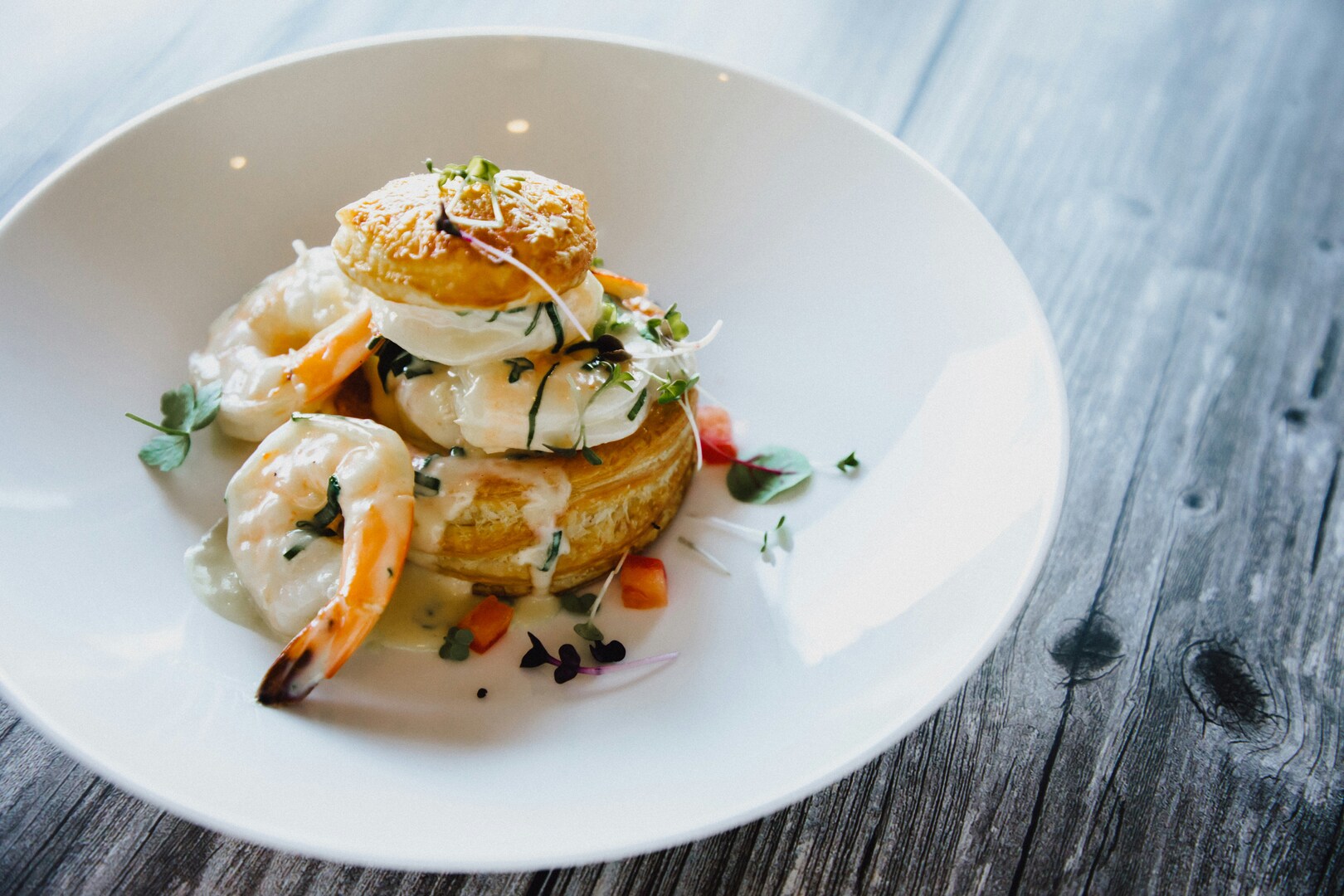
The Full Day Tour with Eiffel Tower, Metro Plus Montmartre pairs two iconic Parisian experiences in a single immersive day. Begin at the Eiffel Tower for elevator access to the second floor and panoramic views, then take the Metro—learning to navigate Paris's underground system with your guide—to Montmartre. The afternoon unfolds as a walking exploration through the district's cobblestone streets, visiting Moulin Rouge, Place du Tertre, and Sacré-Cœur, culminating with a gourmet lunch at La Souris Verte, a neighborhood gem where seasonal, locally sourced ingredients define the menu. This tour balances major landmarks with neighborhood authenticity, Metro navigation skills with guided storytelling.
For those seeking deeper immersion in Montmartre's culinary and cultural traditions, Palates & Panoramas offers a specialized experience led by local guides with artistic backgrounds. This 3.5-hour journey explores Montmartre's village charm while highlighting its gastronomic side. Walk past the Moulin Rouge, pause at Café des 2 Moulins (made famous by Amélie), admire the historic windmills, and photograph the "I Love You Wall." The tour culminates with a 3-course seasonal meal at La Souris Verte, blending neighborhood exploration with authentic Parisian dining. Available as lunch or dinner options, this experience treats Montmartre not as museum but as living, tasting, breathing community.
Cinema Magic approaches Montmartre through a cinematic lens. This walking tour traces film locations throughout Paris, concluding in Montmartre where Amélie, Midnight in Paris, and other beloved films captured the neighborhood's romantic atmosphere. Visit Café des 2 Moulins, see locations featured in classic and contemporary cinema, and understand how Montmartre's visual poetry has made it one of the world's most filmed neighborhoods. For film enthusiasts, this perspective adds narrative layers—watching Montmartre not just as tourist attraction but as character in cinema's ongoing love affair with Paris.
Each tour recognizes that Montmartre is more than hilltop and basilica. It's a neighborhood with culinary traditions, artistic legacy, cinematic significance, and residential rhythms. One Journey's guides—many of them artists, historians, and long-time Paris residents—share not just facts but lived experience, transforming a walk through tourist sites into genuine engagement with Montmartre's multilayered identity.
Is It Worth the Climb?
Unquestionably. Montmartre rewards the effort of ascent with vistas, history, and atmosphere found nowhere else in Paris. Yes, it's touristed—crowds at Sacré-Cœur and Place du Tertre can feel overwhelming mid-afternoon. But step into side streets, climb the hill early morning or at dusk, linger in cafés where locals still gather, and you'll find remnants of the village that sheltered Picasso's genius and Toulouse-Lautrec's nighttime revels. Montmartre is Paris condensed and elevated—geographically, historically, spiritually. To stand on the Sacré-Cœur steps as evening light paints the city golden is to understand why artists came here seeking inspiration, why pilgrims climbed seeking solace, why travelers return seeking that elusive, intoxicating thing we call the soul of Paris.
Traveler's Questions
How do I reach Montmartre?
Multiple Metro lines serve the area: Line 2 (Anvers or Blanche), Line 12 (Abbesses or Lamarck-Caulaincourt), Line 4 (Château Rouge), and Line 13 (Place de Clichy). The Abbesses station features one of Hector Guimard's original Art Nouveau entrances. From Place Saint-Pierre, take the Montmartre Funicular (regular Metro ticket valid) to near Sacré-Cœur's base, or climb the 222 steps for the traditional approach.
When should I visit to avoid crowds?
Early morning (before 9 a.m.) and late afternoon/evening (after 5 p.m.) offer the most tranquil experiences. Weekdays are generally quieter than weekends. Consider visiting Sacré-Cœur during evening services when the basilica's spiritual atmosphere prevails over tourist bustle. Winter months see fewer visitors overall, though cold and shorter daylight hours are trade-offs.
Is Sacré-Cœur free to enter?
Yes, the basilica itself is free. However, climbing the dome for panoramic views requires a paid ticket (€6 as of 2025). The basilica maintains dress codes—modest attire with shoulders and knees covered. Photography is restricted inside; respect ongoing worship. Perpetual adoration occurs in the crypt, welcoming those seeking quiet contemplation.
Are there safety concerns in Montmartre?
Montmartre is generally safe, but tourist areas attract pickpockets and scam artists. Be wary of individuals offering to tie "friendship bracelets" (they demand payment afterward) or aggressive petition-signers (distraction technique while accomplices pickpocket). Keep valuables secured, decline unsolicited approaches firmly, and remain aware in crowded areas. Side streets are typically quiet and safe, even at night.
Can I visit Montmartre with mobility limitations?
The Montmartre Funicular provides step-free access from Place Saint-Pierre to near Sacré-Cœur. However, much of Montmartre's charm lies in steep staircases and sloped cobblestone streets that pose challenges for wheelchairs or limited mobility. Sacré-Cœur's interior is accessible, but the dome climb requires navigating 300 steps. Consider guided transportation or contact One Journey for private arrangements that accommodate mobility needs while still experiencing the neighborhood's highlights.
For guided Montmartre experiences, culinary tours, and personalized explorations of Paris's artistic heart, contact our Tour Concierge at support@onejourneytours.com.