Lisbon's Royal Views: Where History Meets Panoramic Splendor
Perched atop Lisbon's highest hills, the city's royal viewpoints—miradouros—have witnessed centuries of Portuguese history unfold across a landscape of terracotta rooftops, winding medieval streets, and the shimmering Tagus River. These elevated terraces, once favored by Portuguese royalty for their strategic vantage points, now offer visitors some of Europe's most breathtaking urban panoramas. From the medieval ramparts of Castelo de São Jorge to the romantic terraces of Alfama, Lisbon's royal views transform simple sightseeing into an immersive journey through time, where every glance reveals layers of history, culture, and natural beauty that define Portugal's capital.
A City Built on Seven Hills
Lisbon's relationship with elevated viewpoints stretches back over two millennia. The city, established by Phoenician traders around 1200 BCE and later fortified by Romans, Moors, and Portuguese monarchs, naturally developed around its seven hills—a topography that provided both defensive advantages and commanding perspectives. The Moors, who controlled Lisbon from the 8th to 12th centuries, recognized the strategic value of these heights, constructing the fortress that would become Castelo de São Jorge on the highest point, offering unobstructed views of the Tagus River and surrounding countryside.
When King Afonso Henriques captured Lisbon in 1147, ending Moorish rule, the castle became the royal residence, and its ramparts served as the monarch's private viewing platform. Portuguese royalty understood that these elevated positions weren't merely defensive—they were statements of power, places where one could survey the kingdom's capital and demonstrate control over the landscape. Over centuries, as Lisbon expanded beyond its medieval walls, new miradouros emerged throughout the city, each offering distinct perspectives on the capital's evolution from a fortified hilltop settlement to a sprawling metropolis.
The 1755 earthquake, which devastated much of Lisbon, paradoxically enhanced the city's relationship with its viewpoints. As reconstruction reshaped the urban fabric, the surviving elevated terraces became even more valuable—places where residents and visitors could comprehend the scale of both destruction and renewal. Today, these miradouros function as open-air museums, each viewpoint telling a different chapter of Lisbon's story, from Moorish fortifications to Baroque churches, from medieval alleys to modern boulevards.
Historical Timeline:
- c. 1200 BCE – Phoenician settlement establishes Lisbon's strategic hilltop location
- 8th–12th centuries – Moorish occupation builds fortress on highest hill
- 1147 – King Afonso Henriques captures Lisbon, castle becomes royal residence
- 1755 – Great earthquake destroys much of city, but elevated viewpoints survive
- 19th–20th centuries – Miradouros become public spaces, integrated into city planning
- Present – Ongoing preservation and enhancement of historic viewpoints
Castelo de São Jorge: The Crown Jewel
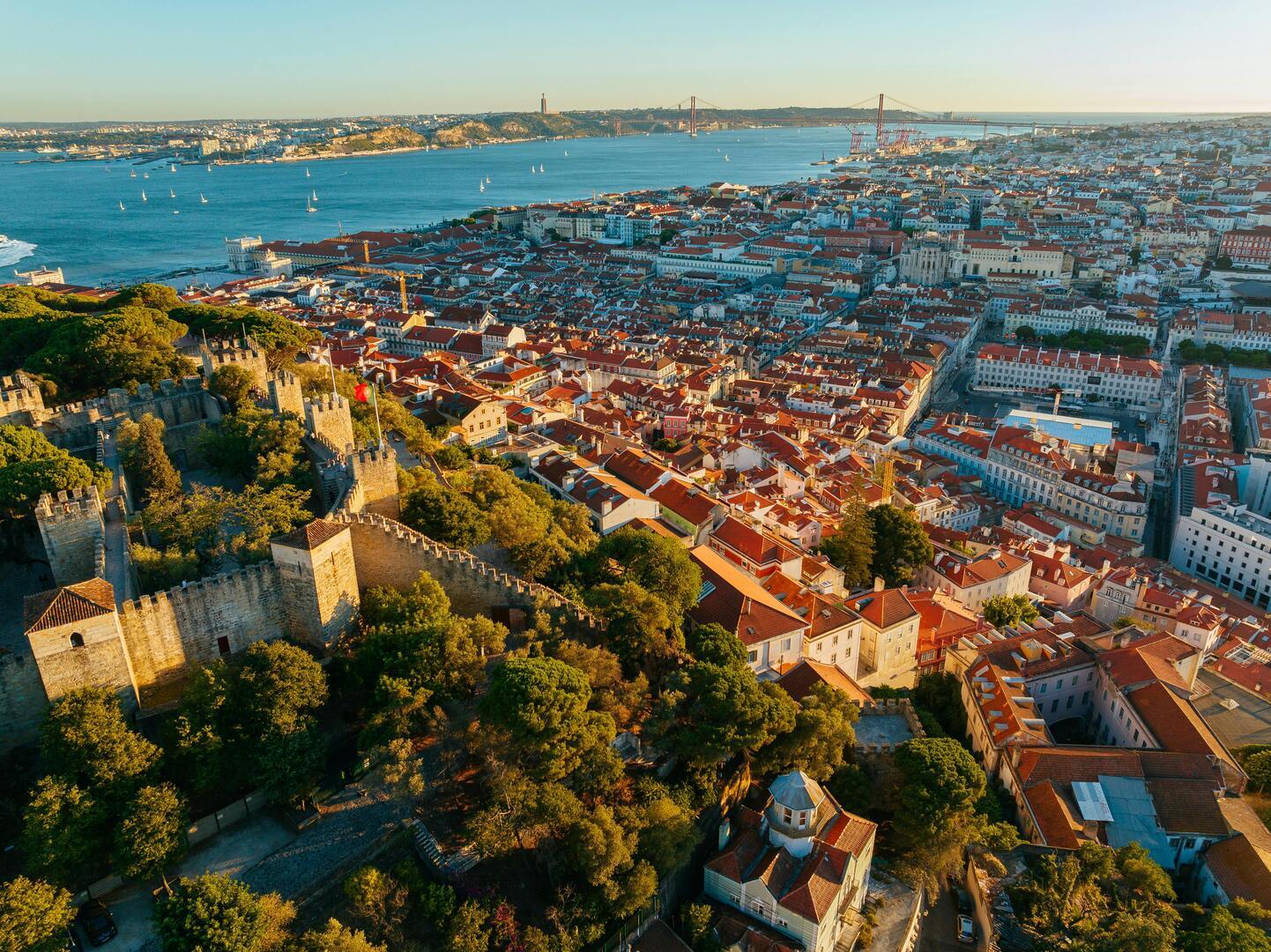
Castelo de São Jorge stands as Lisbon's most iconic viewpoint, its medieval walls rising 110 meters above sea level, offering 360-degree panoramas that encompass the entire city. The castle complex spans approximately 6,000 square meters, with eleven towers and ramparts that once housed Portuguese royalty. Today, visitors can explore archaeological sites revealing traces of Phoenician, Roman, and Moorish settlements, while the castle's permanent exhibition showcases artifacts spanning over 2,500 years of history.
The castle's strategic position made it the natural choice for royal residence from the 12th to 16th centuries. Portuguese monarchs used these ramparts not only for defense but also for ceremonial purposes—watching processions, receiving foreign dignitaries, and demonstrating their authority over the capital. The view from the castle's highest point, the Tower of Ulysses, extends across the Tagus River estuary, revealing Lisbon's unique relationship with water, hills, and sky—a perspective that has remained essentially unchanged for centuries.
Recent renovations have enhanced the visitor experience while preserving the castle's historical integrity. The archaeological site, opened in 2010, allows visitors to walk through layers of history, from Moorish foundations to medieval Portuguese additions. The castle receives over one million visitors annually, making it one of Portugal's most visited monuments, yet the spacious ramparts and multiple viewing platforms ensure that even during peak hours, moments of quiet contemplation remain possible.
The Miradouros: Alfama's Elevated Terraces
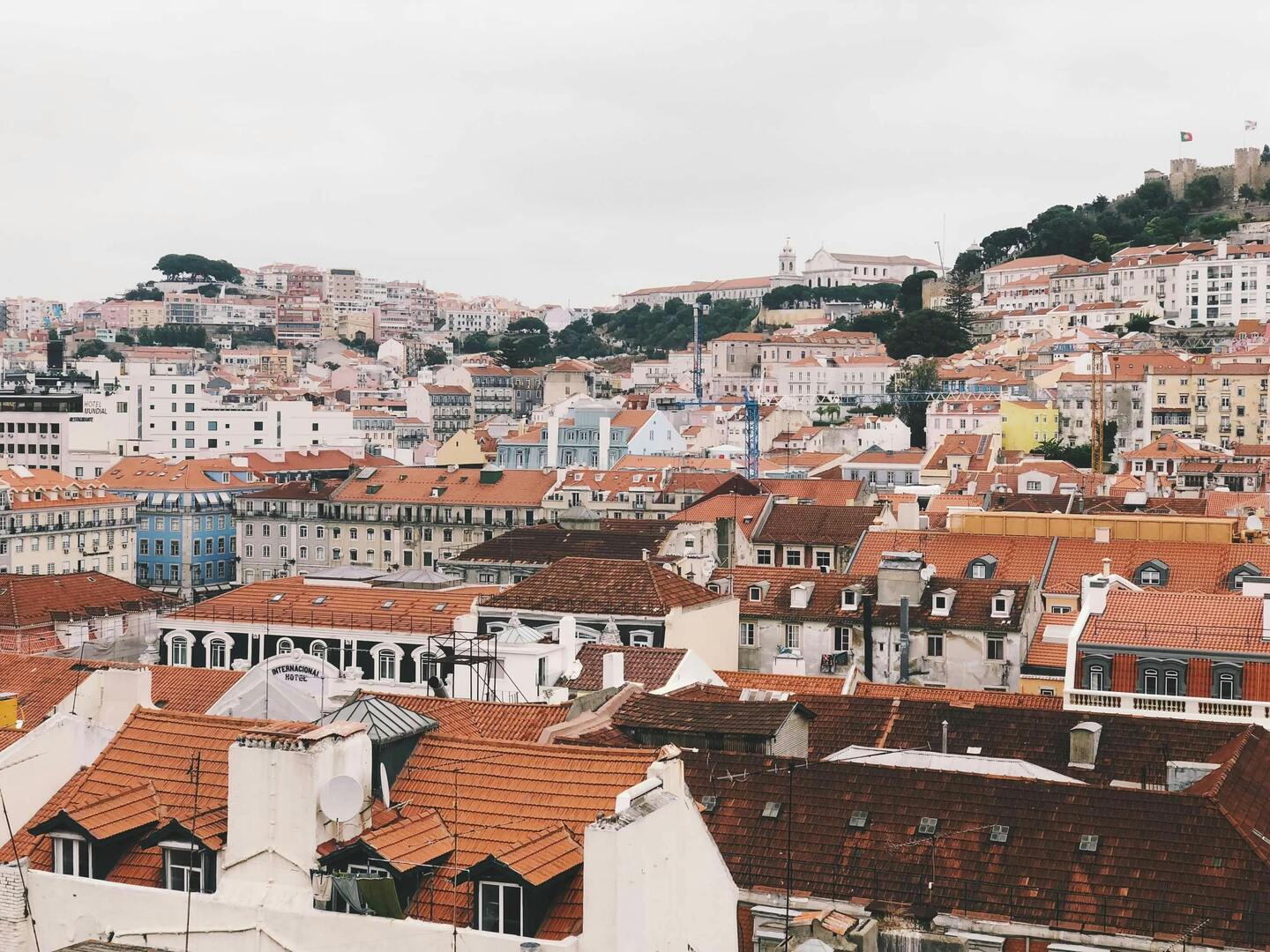
Beyond the castle, Alfama district hosts several of Lisbon's most celebrated miradouros, each offering distinct perspectives on the city's oldest neighborhood. Miradouro de Santa Luzia, perhaps the most romantic of all, features a pergola covered in bougainvillea, azulejo panels depicting scenes from the 1755 earthquake, and uninterrupted views over Alfama's labyrinthine streets toward the Tagus. This terrace, once part of a medieval palace, now serves as a gathering place where locals and visitors share the same benches, the same views, the same appreciation for Lisbon's layered beauty.
Miradouro da Graça, located near the Graça Convent, provides a more comprehensive panorama, encompassing not just Alfama but the entire city center, the river, and the 25 de Abril Bridge. This viewpoint, slightly less crowded than Santa Luzia, rewards those willing to climb the additional steps with a more expansive perspective. The terrace features a small café where visitors can linger over coffee while the city unfolds below—a perfect example of how Lisbon's miradouros function as both viewpoints and social spaces.
Miradouro da Senhora do Monte, the highest viewpoint in Lisbon, offers the most complete vista, revealing the full sweep of the capital from a height of 125 meters. This less-visited terrace provides solitude and reflection, qualities increasingly rare in popular tourist destinations. Here, the city's seven hills become visible as distinct formations, the Tagus River appears as a silver ribbon, and the relationship between natural topography and urban development becomes clear.
Cultural Landmarks Along the Route
The journey to Lisbon's royal views passes through neighborhoods rich with cultural significance. The Fado Museum, located in Alfama's heart, offers essential context for understanding Portuguese identity. Fado—Portugal's melancholic musical tradition—emerged from these very streets, and the museum's exhibitions trace its evolution from working-class expression to UNESCO-recognized cultural heritage. Visiting the museum before ascending to the viewpoints adds emotional depth to the experience, connecting the visual splendor with the soulful sounds that define Portuguese culture.
The Panteão Nacional, originally built as the Church of Santa Engrácia, stands as one of Lisbon's most impressive Baroque structures. Its massive dome, visible from multiple viewpoints, represents Portuguese architectural ambition. The building, which took nearly 300 years to complete, now serves as the final resting place for notable Portuguese figures, including presidents, writers, and explorers. The Panteão's presence in the landscape adds historical weight to the views, reminding visitors that these panoramas encompass not just geography but also the nation's collective memory.
Igreja de São Vicente de Fora, with its remarkable collection of azulejos—Portuguese ceramic tiles—demonstrates how decorative arts became integral to Portuguese identity. The church's tiled panels, depicting historical scenes and religious narratives, represent centuries of artistic tradition. These azulejos, visible throughout Lisbon, create visual continuity between the viewpoints and the streets below, connecting elevated perspectives with ground-level details.
Best Ways to Experience the Royal Views
Timing transforms the experience. Early morning visits, particularly at sunrise, offer the most dramatic lighting as the sun illuminates Lisbon's terracotta rooftops and the Tagus River glimmers in golden light. These hours also provide relative solitude, allowing for uninterrupted contemplation. Late afternoon brings softer light and warmer tones, while sunset transforms the viewpoints into romantic destinations where couples gather to watch the city transition from day to night.
The journey itself matters. Rather than taking a taxi directly to the castle, consider walking through Alfama's narrow streets, allowing the neighborhood's atmosphere to build anticipation. The climb, while challenging on Lisbon's steep cobblestone streets, creates a sense of earned arrival—the views feel more meaningful when reached through effort. Comfortable walking shoes are essential, as are water and patience; the ascent rewards those who take their time, noticing architectural details, listening to snippets of fado from open windows, absorbing the neighborhood's rhythm.
Combining viewpoints creates a comprehensive experience. Start at Miradouro de Santa Luzia for its intimate, romantic perspective, then continue to Miradouro da Graça for a broader view, and finally reach Castelo de São Jorge for the ultimate panorama. Each viewpoint offers something different—Santa Luzia's charm, Graça's expansiveness, the castle's historical weight. Together, they form a narrative arc that reveals Lisbon's complexity, from intimate neighborhood details to city-wide perspectives.
"Lisbon's miradouros aren't just viewpoints—they're windows into Portuguese history, culture, and identity. To stand where royalty once stood, seeing what they saw, creates an unbreakable connection to the city's soul."
A Day Exploring Royal Views
A well-planned day exploring Lisbon's royal views begins at the Fado Museum, where exhibitions provide cultural context that enriches everything that follows. Spend an hour understanding fado's origins, its connection to Alfama, and its role in Portuguese identity. From the museum, walk through Alfama's labyrinthine streets, noticing how the neighborhood's medieval layout creates intimate spaces that contrast with the expansive views to come.
Pause at Quase Café for coffee and traditional Portuguese pastries—a moment of rest before the climb. This charming café, nestled in Alfama's heart, offers authentic local atmosphere, allowing you to observe neighborhood life while refueling. The pastries, particularly pastéis de nata or queijadas, provide energy for the ascent while connecting you to Portuguese culinary traditions.
The journey continues through Alfama's steep streets, past the Panteão Nacional and Igreja de São Vicente de Fora, each landmark adding historical layers to the experience. Arrive at Miradouro de Santa Luzia during late morning, when the light illuminates Alfama's rooftops and the Tagus sparkles in the distance. Continue to Miradouro da Graça for a broader perspective, then make the final ascent to Castelo de São Jorge, where the full panorama awaits. Allow at least two hours to explore the castle's ramparts, archaeological sites, and multiple viewing platforms. The experience culminates not at a single viewpoint but through a progression of perspectives, each revealing different aspects of Lisbon's beauty and history.
Experience This Attraction With Our Tours
One Journey's Lisbon's Royal Views: Castelo de São Jorge Entry & City Tour transforms independent exploration into a guided journey through history, culture, and panoramic beauty. This 1.5-hour experience begins at the Fado Museum, where your guide provides essential context about Portuguese musical heritage and its connection to Alfama's streets. The tour then progresses through the neighborhood's historic landmarks, including the Panteão Nacional and Igreja de São Vicente de Fora, each stop building toward the ultimate reward: entry to Castelo de São Jorge with its unparalleled 360-degree views.
What distinguishes this tour is its integration of cultural immersion with scenic appreciation. Rather than rushing directly to viewpoints, the experience includes a relaxing break at Quase Café, where you'll enjoy coffee, water, and traditional Portuguese pastries while absorbing Alfama's atmosphere. This pause allows for reflection and connection—both with the neighborhood and with fellow travelers. The café stop isn't merely refreshment; it's an opportunity to experience local life, to observe how residents interact with their historic surroundings, to understand that these viewpoints exist within a living, breathing community.
The tour's inclusion of Castelo de São Jorge entry eliminates the need to queue separately, and your guide's expertise ensures you understand what you're seeing—not just the visual panorama but the historical layers, the architectural significance, the stories embedded in every stone. The tour concludes at the castle, but your entry ticket allows you to remain and explore independently, creating a perfect balance between guided insight and personal discovery. This approach recognizes that the best travel experiences combine expert knowledge with the freedom to linger, to return to favorite viewpoints, to experience the same perspectives at different times of day.
For photography enthusiasts, history lovers, and anyone seeking to understand Lisbon beyond surface-level sightseeing, this tour provides the structure, context, and access that transform simple viewing into meaningful experience. The combination of cultural landmarks, authentic café experience, and exclusive castle entry creates a comprehensive introduction to Lisbon's royal views, equipping you with knowledge and appreciation that enhance every subsequent viewpoint you visit independently.
Is It Worth Visiting?
Without question. Lisbon's royal views represent one of Europe's most accessible and rewarding travel experiences—panoramas that combine natural beauty, historical significance, and cultural immersion in ways that few destinations can match. These viewpoints aren't merely photo opportunities; they're places where history becomes tangible, where the relationship between landscape and human settlement becomes clear, where the city's identity reveals itself through elevation and perspective. The combination of medieval fortifications, Baroque churches, and modern urban development, all visible from a single vantage point, creates a unique understanding of Portuguese history and culture that ground-level exploration cannot provide.
The experience rewards visitors of all interests—photographers find endless compositions, history enthusiasts discover layers of significance, romantics appreciate the atmospheric beauty, and casual travelers simply enjoy some of Europe's finest urban views. The accessibility of these viewpoints, their integration into walkable neighborhoods, and their connection to authentic local culture make them essential to any Lisbon visit. To skip the royal views is to miss the city's defining characteristic: its relationship with elevation, with perspective, with the way hills and viewpoints shape both urban development and human experience.
Traveler's Questions
What is the best time to visit the viewpoints?
Early morning (sunrise to 9 a.m.) offers the best lighting and fewest crowds, while late afternoon provides softer light and warmer tones. Sunset transforms the viewpoints into romantic destinations, though crowds increase. Midday can be hot during summer months, but the views remain spectacular. Each time of day reveals different aspects of Lisbon's beauty, so consider visiting multiple times if your schedule allows.
How much does it cost to visit Castelo de São Jorge?
Adult admission is approximately €15, with discounts for students, seniors, and children. The castle ticket includes access to all ramparts, towers, archaeological sites, and the permanent exhibition. Most other miradouros are free and open to the public. Consider that a guided tour often includes castle entry, eliminating separate ticket purchase and providing valuable context.
Is the climb to the viewpoints difficult?
The ascent involves steep cobblestone streets and numerous steps, requiring moderate fitness. The climb from Alfama to Castelo de São Jorge takes approximately 15–20 minutes at a comfortable pace. Comfortable walking shoes are essential, and those with mobility limitations may prefer taking a taxi or tram partway. The effort rewards with spectacular views, and multiple rest points exist along the route.
Can I visit the viewpoints independently or should I take a tour?
Both approaches work well. Independent exploration allows flexibility and personal pacing, while guided tours provide historical context, eliminate entry queues, and ensure you don't miss significant details. For first-time visitors, a tour offers valuable orientation and cultural insights that enhance the experience. Many visitors combine both—taking a tour initially, then returning independently to favorite viewpoints at different times of day.
What should I bring when visiting the viewpoints?
Essential items include comfortable walking shoes, water (especially during summer), sunscreen, and a camera. A light jacket or sweater helps during cooler months or windy conditions at elevated positions. Consider bringing a small snack, as the climb can be tiring, though cafés are available near most viewpoints. Cash is useful for small purchases at viewpoint cafés or street vendors.
For guided tours of Lisbon's royal views, castle entry assistance, and personalized recommendations for experiencing the city's most spectacular viewpoints, contact our Tour Concierge at support@onejourneytours.com.