The Palace of Versailles: Where Power Met Art in the Age of Kings
Just twelve miles southwest of Paris, where the Seine flows through what was once royal hunting grounds, stands one of humanity's most ambitious architectural statements. The Palace of Versailles—Château de Versailles—began as Louis XIII's modest hunting lodge in 1623, a retreat from court intrigues. By 1682, his son Louis XIV had transformed it into the seat of absolute power, a symbol so potent that it would define French monarchy for over a century and inspire palaces across Europe. Today, this UNESCO World Heritage site spans 63,154 square meters, contains 2,300 rooms, and welcomes millions of visitors annually who come to witness where the Sun King orchestrated his daily rituals of power, where Marie Antoinette sought refuge in her private domain, and where the French Revolution found its symbolic beginning.
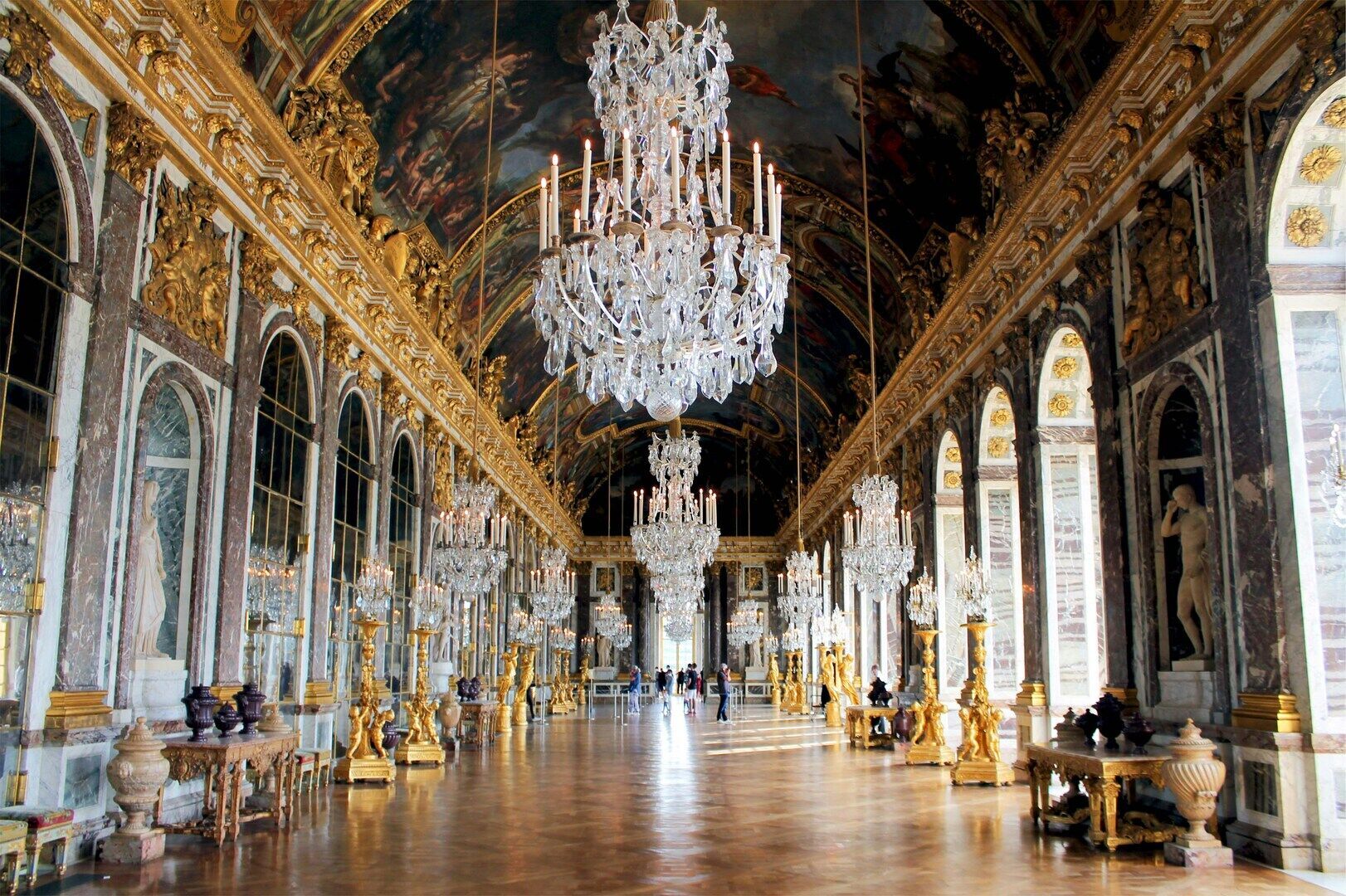
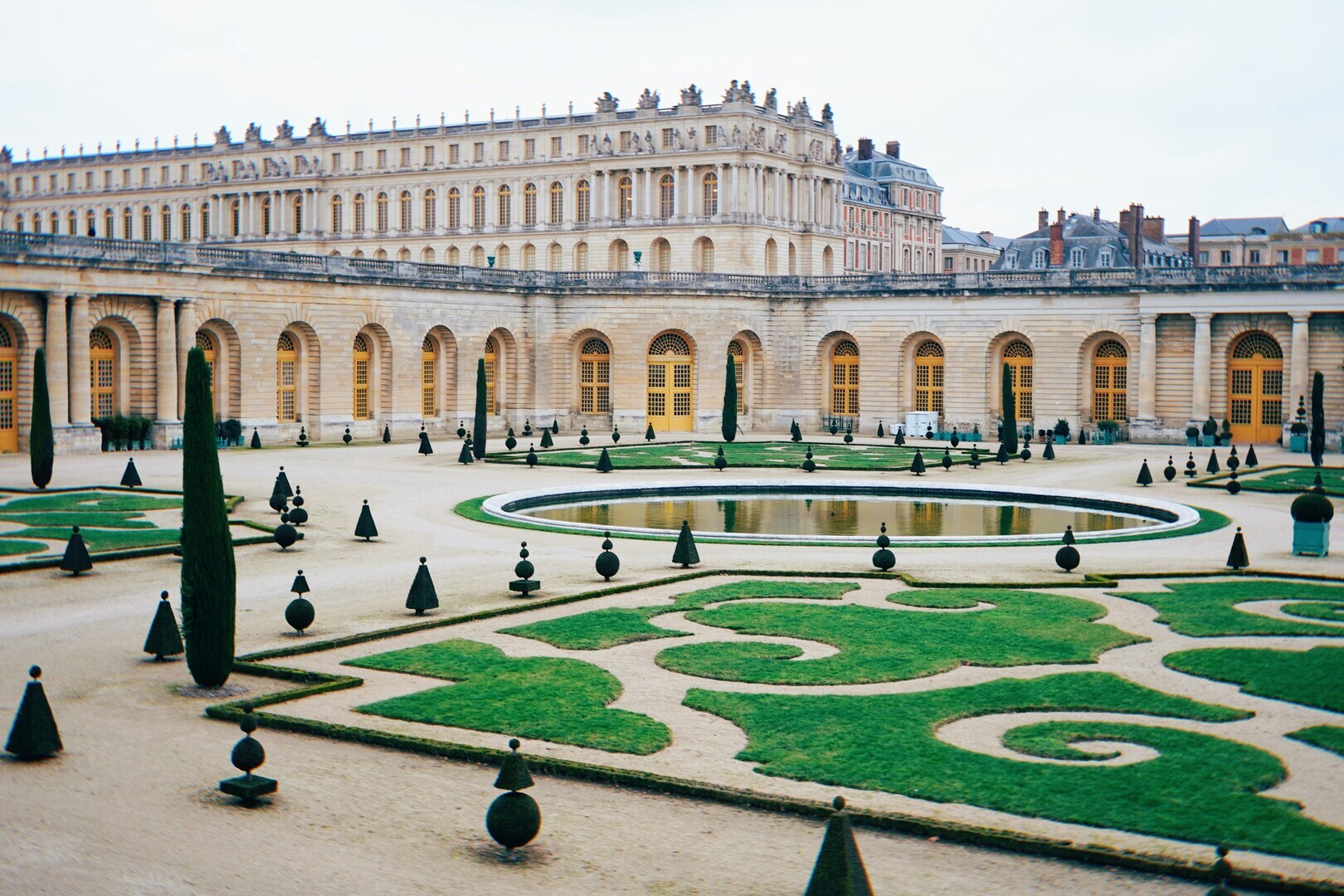
Versailles represents more than architecture—it is a three-dimensional manifesto of absolutism, a carefully choreographed environment where every detail reinforced Louis XIV's divine right to rule. The Hall of Mirrors, with its 357 mirrors reflecting the gardens' geometric perfection, served as a gallery for diplomatic receptions and royal ceremonies. The State Apartments, each named for a classical deity, demonstrated the king's connection to the gods. The gardens, designed by André Le Nôtre, extended the palace's authority across 800 hectares, using perspective and hydraulics to create an illusion of infinite control over nature itself. To visit Versailles is to step into a world where politics, art, and theater merged into a single, overwhelming spectacle designed to humble visitors and elevate the monarch.
The Sun King's Vision: From Hunting Lodge to Seat of Power
Versailles began humbly. In 1623, Louis XIII purchased land in the small village of Versailles and commissioned a simple hunting lodge—a two-story brick structure with a slate roof, far from the grandeur that would follow. The king sought escape from the pressures of Paris, a place where he could pursue his passion for hunting in relative privacy. The location was strategic: close enough to the capital for political access, yet distant enough to maintain separation from court intrigues. This modest beginning would prove crucial, as the site's existing infrastructure and royal association made it the natural choice when Louis XIV decided to build his ultimate statement of power.
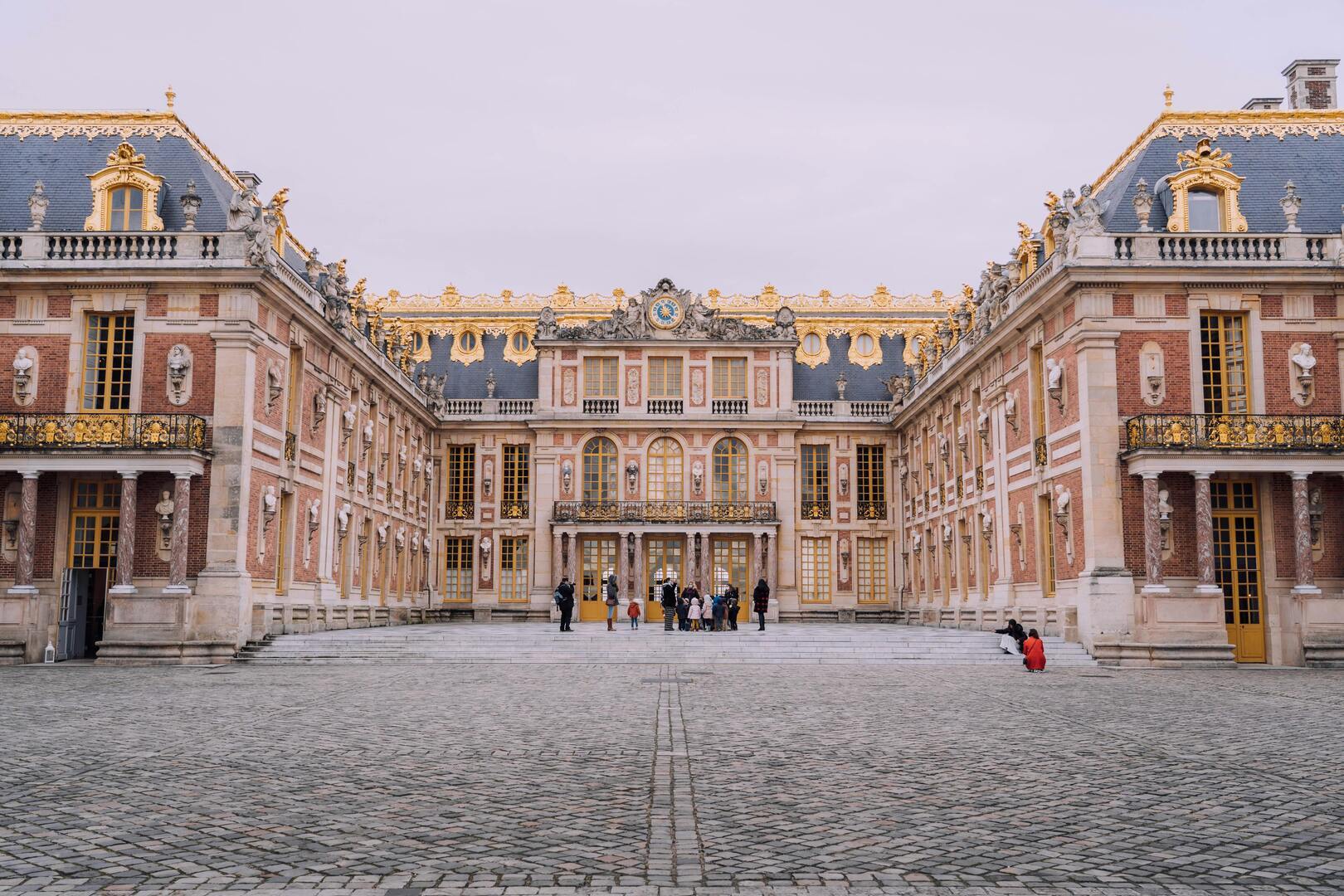
The transformation began in earnest in 1661, when Louis XIV, at age 23, took personal control of the French government following the death of Cardinal Mazarin. The young king understood that architecture could serve as political theater. He commissioned architect Louis Le Vau, landscape designer André Le Nôtre, and painter-decorator Charles Le Brun to transform his father's hunting lodge into a palace that would astonish Europe. The work proceeded in phases: the first enlargement (1661-1668) created the Marble Courtyard and expanded the royal apartments. The second phase (1669-1672) added the north and south wings, creating the U-shaped structure we recognize today. But it was the third phase, beginning in 1678, that produced Versailles' most iconic features: the Hall of Mirrors, the north and south wings' extensions, and the complete redesign of the gardens.
On May 6, 1682, Louis XIV officially moved the French court and government to Versailles, establishing it as the permanent seat of power. This decision was both practical and symbolic. Practically, Versailles allowed the king to house thousands of courtiers, nobles, and servants in a controlled environment where he could monitor their activities and prevent the kind of aristocratic plotting that had troubled his childhood. Symbolically, the palace's distance from Paris reinforced the king's independence from the capital's merchants, lawyers, and potential revolutionaries. The daily rituals at Versailles—from the lever (rising ceremony) to the coucher (bedtime ceremony)—turned the king's life into public theater, with nobles competing for the honor of handing him his shirt or holding his candle. Every gesture reinforced hierarchy, every room demonstrated magnificence, every garden vista suggested infinite royal authority.
Key Architects and Artists
Versailles represents a collaboration of France's greatest 17th-century talents: Louis Le Vau (architect), Jules Hardouin-Mansart (who succeeded Le Vau and designed the Hall of Mirrors), André Le Nôtre (landscape architect who created the gardens), and Charles Le Brun (chief painter and decorator). Later, under Louis XV, Ange-Jacques Gabriel designed the Royal Opera and Petit Trianon. Each contributed to what became the defining example of French Baroque architecture.
By the Numbers: The Scale of Royal Ambition
The Palace of Versailles encompasses 63,154 square meters of floor space, containing 2,300 rooms spread across the main palace, the Grand Trianon, Petit Trianon, and various outbuildings. The Hall of Mirrors alone stretches 73 meters in length, its 357 mirrors reflecting light from seventeen arched windows overlooking the gardens. The estate's gardens cover 800 hectares, featuring 200,000 trees, 210,000 flowers planted annually, 50 fountains, and 620 water jets that required revolutionary hydraulic engineering to operate simultaneously. At its peak under Louis XIV, the palace housed approximately 3,000 courtiers and servants, with the king's daily routine involving hundreds of people in carefully orchestrated ceremonies.
The construction costs were staggering even by royal standards. While exact figures are difficult to calculate in modern currency, historians estimate that Versailles consumed roughly 25% of France's annual state revenue during Louis XIV's reign. The Hall of Mirrors required Venetian glassmakers to be imported, as French technology couldn't produce mirrors of sufficient size and quality. The gardens' fountains consumed more water daily than the entire city of Paris, requiring elaborate aqueduct systems and reservoirs. The palace's art collection, much of which was dispersed during the Revolution, included thousands of paintings, sculptures, tapestries, and decorative objects—many created specifically for Versailles by the era's greatest artists.
Today, Versailles welcomes over 10 million visitors annually, making it one of the world's most visited historical sites. The palace maintains a staff of approximately 900 people, including curators, restorers, gardeners, and security personnel. Ongoing restoration projects require constant attention: the roof alone covers 13 hectares and requires periodic replacement of lead tiles. The gardens employ 25 full-time gardeners who maintain the formal parterres, bosquets, and fountains according to Le Nôtre's original designs, though some areas have been modified over centuries. The estate's library contains over 15,000 volumes related to Versailles history, while the archives preserve millions of documents detailing everything from royal expenditures to court gossip.
Revolution, Restoration, and Renewal: Versailles Through the Centuries
The French Revolution marked Versailles' abrupt transformation from seat of power to symbol of excess. On October 5, 1789, a crowd of Parisian women, joined by revolutionaries, marched to Versailles demanding bread and forcing Louis XVI and Marie Antoinette to return to Paris—they would never again reside at the palace. The National Assembly declared Versailles national property in 1792, and much of the furniture and art was sold at auction or moved to the Louvre. The palace itself narrowly escaped destruction; revolutionary leaders debated demolishing it as a symbol of tyranny, but ultimately decided to preserve it as a monument to the people's victory.
Under Napoleon, Versailles served as a military hospital and later as a residence for his second wife, Marie-Louise. But it was Louis-Philippe, who came to the throne in 1830, who gave Versailles its modern identity. In 1837, he transformed the palace into the Museum of the History of France, commissioning vast historical paintings and dedicating rooms to different periods of French history. This decision saved Versailles from decay and established its dual role as both royal residence restoration and national museum—a tension that continues to shape preservation efforts today.
The 20th century brought both challenges and triumphs. The Treaty of Versailles, ending World War I, was signed in the Hall of Mirrors on June 28, 1919—a symbolic choice that placed Germany's defeat in the same room where the German Empire had been proclaimed in 1871. During World War II, the palace suffered minimal damage, though some art was evacuated for safekeeping. Post-war restoration efforts, led by curator Pierre de Nolhac and his successors, gradually restored the royal apartments to their 18th-century appearance, removing 19th-century additions and recreating period-appropriate furnishings based on archival research.
Recent decades have seen ambitious restoration projects. The Royal Opera, completed in 1770 for the marriage of the future Louis XVI and Marie Antoinette, underwent a €12 million restoration completed in 2009. The Royal Chapel, consecrated in 1710, received extensive work to restore its painted ceiling and gilded decoration. Perhaps most dramatically, the Grand Trianon's roof was completely replaced in 2015, requiring 200,000 hours of work by master craftsmen. The palace now hosts major contemporary art exhibitions, musical performances in the Royal Opera, and even virtual reality experiences that allow visitors to explore the gardens as they appeared in 1682—blending cutting-edge technology with historical preservation.
"Versailles was not built in a day, nor was it meant to be understood in one. It is a place that reveals itself gradually, through repeated visits and careful observation of its details—each room, each painting, each garden vista telling part of a larger story about power, art, and the human desire to create something that transcends time."
Experiencing Versailles: From Quick Visits to Deep Immersion
Versailles rewards different approaches depending on your interests, time, and energy. First-time visitors often make the mistake of trying to see everything in a single day—an ambition that leads to exhaustion and superficial experience. The palace, gardens, and Trianon estates are simply too vast for comprehensive exploration in one visit. Instead, choose your focus: the main palace for its opulent interiors and historical significance, the gardens for their landscape architecture and seasonal beauty, or the Trianon palaces for their more intimate scale and connection to Marie Antoinette's private world.
Timing significantly affects your experience. Summer months (June through August) draw the largest crowds, with wait times for palace entry sometimes exceeding two hours. Spring and autumn offer milder weather, fewer visitors, and the gardens at their most beautiful—spring brings flowering parterres and fountains operating, while autumn offers golden light and fewer crowds. Winter visits provide the most intimate experience, though some garden features are closed and fountains don't operate. Arrive early—the palace opens at 9:00 a.m., and arriving by 8:30 a.m. allows you to queue before the tour buses arrive. Alternatively, late afternoon visits (after 3:00 p.m.) often see reduced crowds as day-trippers begin departing.
Ticket selection matters. The basic Palace Entry ticket grants access to the main palace, including the State Apartments, Hall of Mirrors, and Royal Chapel—sufficient for a focused 2-3 hour visit. The Passport Ticket includes everything: palace, gardens, Grand Trianon, Petit Trianon, and the Queen's Hamlet, plus access to Musical Fountains Shows on select days (typically weekends April through October). For serious visitors, the Passport represents better value, though it requires a full day to appreciate. Consider purchasing tickets online in advance to avoid entry queues, especially during peak season. Audio guides, available in multiple languages, provide essential context for understanding what you're seeing—the palace's significance lies as much in its history and symbolism as in its visual splendor.
Special experiences enhance standard visits. The Musical Fountains Shows, held on weekends and select Tuesdays from April through October, bring the gardens to life with Baroque music synchronized to fountain displays—a recreation of the spectacles Louis XIV staged for court entertainment. Evening shows, held on select Saturdays in summer, combine fountains, music, and fireworks for truly spectacular experiences. The Royal Opera hosts concerts and operas throughout the year, offering opportunities to experience the palace's acoustics and 18th-century ambiance. For those seeking deeper understanding, guided tours focus on specific themes: Marie Antoinette's private apartments, the palace's architectural evolution, or the gardens' hydraulic engineering. These specialized tours require advance booking but provide insights unavailable to independent visitors.
A Day at Versailles: Sample Itineraries
A half-day palace-focused visit begins with early arrival—aim for 8:30 a.m. to queue before tour buses arrive. Enter through the main gates, collect your audio guide, and proceed directly to the State Apartments. Start with the Hercules Salon, then move through the rooms named for classical deities: the Venus Salon, Diana Salon, Mars Salon, Mercury Salon, Apollo Salon (the throne room), and War Salon. These rooms demonstrate the progression from private to public space, each more magnificent than the last. The Hall of Mirrors comes next—allow time here, as this 73-meter gallery represents Versailles' most iconic space. Continue through the Peace Salon and the Queen's State Apartments, including Marie Antoinette's bedchamber. The Royal Chapel, with its two-story design allowing the king to attend mass from the upper gallery, provides a fitting conclusion. Plan 2-3 hours for this route, then exit to the gardens for a brief stroll before departing.
A full-day Passport Ticket itinerary expands significantly. Begin with the palace tour described above, but allocate 3-4 hours rather than 2-3. After the palace, exit to the gardens and walk the central axis toward the Grand Canal—this 1.5-kilometer water feature demonstrates Le Nôtre's mastery of perspective. Visit the Latona Fountain and Apollo's Chariot Fountain, then explore one or two bosquets (enclosed garden rooms): the Colonnade, the Ballroom Grove, or the Enceladus Grove. Return to the palace area for lunch—options range from casual cafés to the elegant Ore restaurant in the Dufour Pavilion. Afternoon should focus on the Trianon estates: take the Petit Train (small tourist train) or walk the 20 minutes to the Grand Trianon, Louis XIV's pink marble retreat. Continue to the Petit Trianon, built for Louis XV's mistress Madame de Pompadour but most associated with Marie Antoinette, who made it her private sanctuary. The Queen's Hamlet, a rustic village built for Marie Antoinette's escape from court formality, completes the Trianon experience. This full-day itinerary requires comfortable shoes, stamina, and advance planning, but provides the most comprehensive Versailles experience.
A gardens-focused visit suits those who've already seen the palace or prefer outdoor experiences. Arrive early and enter the gardens directly (separate ticket required if not using Passport). The gardens open at 8:00 a.m., offering quiet morning hours before crowds arrive. Follow the central axis to the Grand Canal, then explore the northern bosquets: the Colonnade, the Ballroom Grove, and the Three Fountains Grove. Cross to the southern side to visit the Orangery, the Neptune Fountain, and the Dragon Fountain. If visiting during Musical Fountains Show days, plan your route to coincide with scheduled performances—the fountains operate for 10-15 minutes at specific times, and the experience of seeing them in action transforms the gardens from static landscape to living spectacle. Allow 3-4 hours for thorough garden exploration, more if attending fountain shows. The gardens' scale means you'll cover significant distance; consider renting a bicycle or taking the Petit Train for longer visits.
Experience This Attraction With Our Tours
Navigating from Paris to Versailles independently can feel daunting—the RER train system, ticket purchasing, and palace entry logistics create barriers that distract from the experience itself. One Journey's Palace of Versailles Escorted Tour eliminates these obstacles, providing expert guidance from central Paris to the palace gates, ensuring you arrive relaxed and ready to appreciate Versailles' grandeur rather than exhausted from transit confusion.
The experience begins at the Maison de la Culture du Japon in Paris, where your escort meets you with a red "One Journey Tours" sign. From this convenient location near the Gare Champs de Mars Tour Eiffel RER C station, your escort manages all transportation logistics: purchasing train tickets, navigating the RER system, and providing cultural context during the journey. The RER C line offers direct service to Versailles Château–Rive Gauche, often faster than tour buses, especially during major events like the Summer Olympics when road traffic becomes congested. Your escort shares insights into French history, the Paris transit system, and what to expect at Versailles, transforming the journey into part of the experience rather than merely transportation.
Upon arrival at Versailles, your escort guides you through the 15-minute walk from the station to the palace, following the path once taken by royalty. At the palace gates, you receive your entry ticket (choose between Palace Entry or the comprehensive Passport Ticket when booking) and guidance to the appropriate entrance. Your escort provides orientation about ticket types, palace layout, and key highlights to prioritize, then leaves you to explore independently at your own pace. This approach combines the security of guided logistics with the freedom of independent exploration—you avoid the stress of navigation and ticket confusion while maintaining control over your palace experience.
Tours run Tuesday through Sunday at 2:00 p.m., with a total duration of approximately 4.5 hours including transit time. The $75 per adult cost includes your escort service, palace entry ticket (Palace Entry or Passport, depending on your selection), and all the peace of mind that comes with expert guidance. Free cancellation is available 48 hours prior to tour start time, providing flexibility for changing travel plans. This escorted experience particularly benefits first-time visitors to France, those uncomfortable with public transit navigation, and anyone who prefers to focus on Versailles itself rather than logistics. You'll arrive at the palace gates confident, oriented, and ready to appreciate one of the world's greatest architectural achievements.
Is It Worth Visiting?
Absolutely—but with realistic expectations about what Versailles offers and demands. This is not a quick stop between Paris attractions. Versailles requires time, energy, and advance planning to appreciate properly. Summer crowds can be overwhelming, with wait times exceeding two hours and interior spaces feeling uncomfortably crowded. The palace's scale means you'll cover significant distance, and the gardens alone require hours to explore thoroughly. Those seeking a quick photo opportunity or expecting to see everything in two hours will leave frustrated. Versailles rewards those who allocate at least half a day, preferably a full day, and who arrive with some understanding of its historical significance.
For history enthusiasts, architecture lovers, and anyone fascinated by the intersection of power and art, Versailles offers an unparalleled experience. The Hall of Mirrors alone justifies the visit—standing in that 73-meter gallery, understanding its role in French history from Louis XIV's daily processions to the Treaty of Versailles signing, creates a connection to the past that photographs cannot convey. The State Apartments demonstrate Baroque opulence at its most refined, while the gardens represent landscape architecture's highest achievement. For those interested in Marie Antoinette, the Petit Trianon and Queen's Hamlet provide intimate glimpses into her private world, humanizing a figure often reduced to caricature.
Versailles works best for visitors who appreciate historical context, enjoy walking, and can handle crowds with patience. It's ideal for those with a full day to dedicate, comfortable footwear, and interest in understanding how architecture served political power. The experience is less suitable for those with severe mobility limitations (though some areas are accessible), very young children who may struggle with the walking and historical focus, or travelers who prefer intimate, quiet experiences. But for anyone willing to invest the time and energy, Versailles delivers one of the world's most significant cultural experiences—a place where history, art, and power converge in ways that continue to resonate centuries after its construction.
Traveler's Questions
How do I get to Versailles from Paris?
The most convenient public transportation option is the RER C train line, which provides direct service from central Paris to Versailles Château–Rive Gauche station. From central Paris stations like Musée d'Orsay, Invalides, or Champ de Mars Tour Eiffel, the journey takes approximately 40-50 minutes. Purchase tickets at any RER or Métro station—you'll need a ticket valid for zones 1-4. From Versailles Château–Rive Gauche station, it's a 15-minute walk to the palace entrance. Alternatively, you can take a train from Paris Montparnasse station to Versailles Chantiers (about 20 minutes), then walk 20 minutes to the palace, or take a train from Paris Saint-Lazare to Versailles Rive Droite (about 30 minutes), then walk 15 minutes. Tour buses also operate from central Paris, though they're often slower than trains, especially during peak traffic. [Source: en.chateauversailles.fr](https://en.chateauversailles.fr/discover/estate/palace)
What's the difference between Palace Entry and Passport tickets?
The Palace Entry ticket grants access to the main palace, including the State Apartments, Hall of Mirrors, Royal Chapel, and temporary exhibitions. This ticket is sufficient for a focused 2-3 hour visit to the palace interiors. The Passport Ticket includes everything in the Palace Entry ticket, plus access to the gardens (on days when Musical Fountains Shows aren't operating, gardens are free; on show days, Passport includes fountain show access), the Grand Trianon, Petit Trianon, and the Queen's Hamlet. The Passport represents significantly better value if you have a full day to dedicate, as it allows comprehensive exploration of the entire estate. Both ticket types can be purchased online in advance, which is highly recommended during peak season to avoid long entry queues. [Source: en.chateauversailles.fr](https://en.chateauversailles.fr/discover/estate/palace)
When are the Musical Fountains Shows?
The Musical Fountains Shows operate on weekends (Saturdays and Sundays) and select Tuesdays from April through October. During these shows, Baroque music plays while the gardens' fountains operate in synchronized displays—a recreation of the spectacles Louis XIV staged for court entertainment. Shows typically run for 10-15 minutes at scheduled times throughout the day. Evening shows, held on select Saturdays in summer, combine fountains, music, and fireworks for spectacular experiences. On non-show days, the gardens are accessible with a separate ticket or included in the Passport, but fountains operate only briefly. Check the official Versailles website for current schedules, as dates and times vary by season. The shows significantly enhance the garden experience, making them worth planning your visit around if possible. [Source: en.chateauversailles.fr](https://en.chateauversailles.fr/discover/estate/palace)
How much time should I allocate for a Versailles visit?
A minimum of half a day (3-4 hours) allows you to see the main palace thoroughly, including the State Apartments, Hall of Mirrors, and Royal Chapel, plus a brief stroll through the gardens. A full day (6-8 hours) enables comprehensive exploration: the palace in the morning, gardens and fountains in the afternoon, and the Trianon estates if using a Passport ticket. The palace alone requires 2-3 hours for a meaningful visit, while the gardens can easily consume 3-4 hours if you explore multiple bosquets and attend fountain shows. The Trianon palaces add another 1-2 hours. Attempting to see everything in less than half a day leads to exhaustion and superficial experience. Plan based on your interests: palace-focused visits need less time than comprehensive estate exploration. [Source: whc.unesco.org/en/list/83/](https://whc.unesco.org/en/list/83/)
Is Versailles accessible for visitors with mobility limitations?
The palace has made significant accessibility improvements, though challenges remain due to the historic building's structure. The main palace has elevators and accessible routes to key areas including the Hall of Mirrors and State Apartments. Wheelchairs are available free of charge at the entrance. However, some areas, particularly the Royal Opera's upper levels and certain private apartments, have limited or no wheelchair access. The gardens present greater challenges—the vast scale, gravel paths, and distance between features make navigation difficult for those with mobility limitations. The Petit Train (small tourist train) helps access distant areas, but not all garden features are accessible. The Trianon palaces have better accessibility than the main palace. Visitors with specific accessibility needs should contact Versailles in advance to discuss routes and available accommodations. [Source: en.chateauversailles.fr](https://en.chateauversailles.fr/discover/estate/palace)
For guided Versailles tours, transportation assistance, and personalized palace visit planning, contact our Tour Concierge at support@onejourneytours.com.