The Paris Métro: Navigating the Pulse of the City
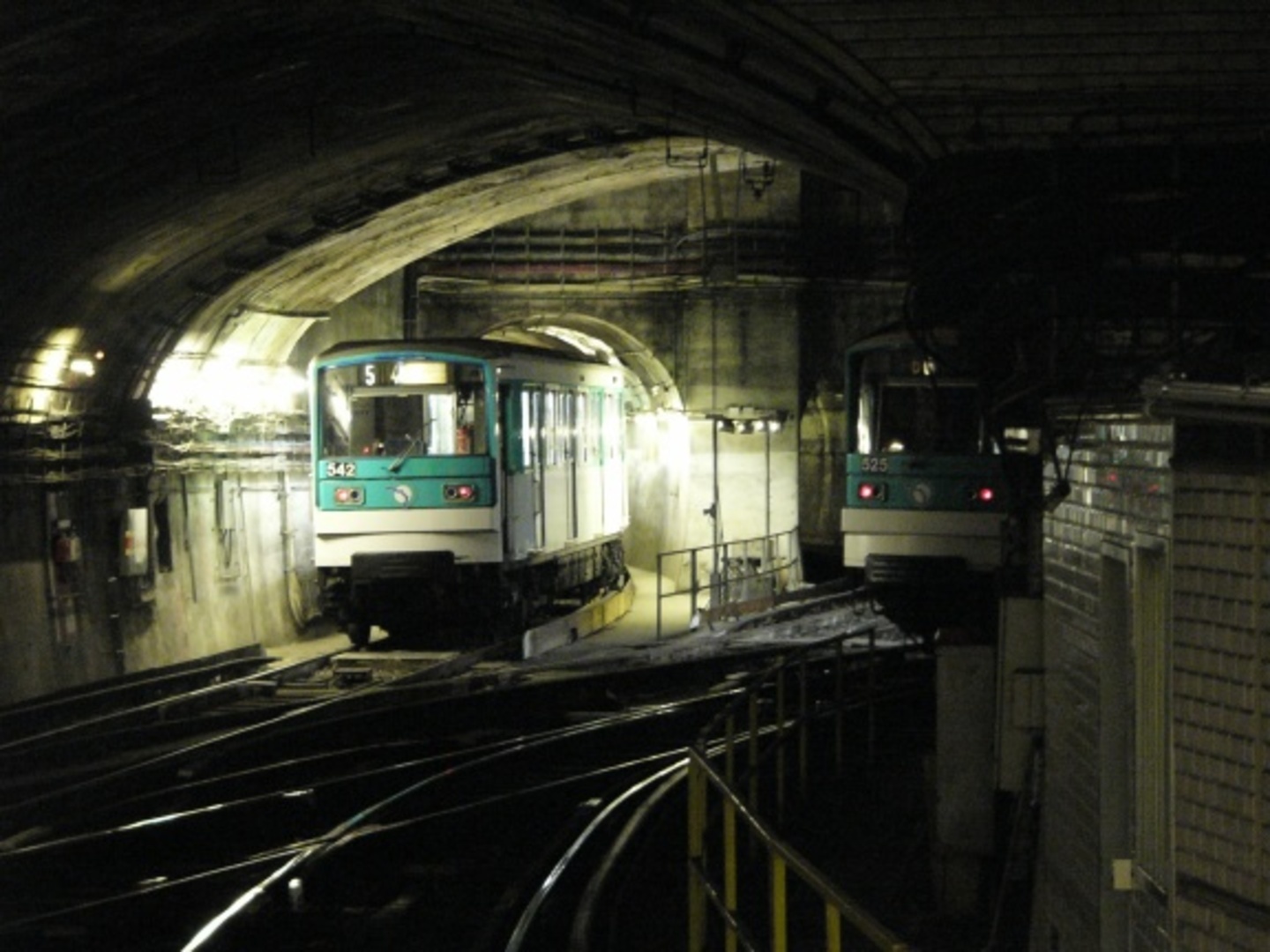
Each morning, the Paris Métro swallows more than five million passengers into its labyrinth of tunnels, delivering them efficiently across one of Europe's most complex urban landscapes. Since its inaugural journey on July 19, 1900, this underground network has evolved from a Belle Époque engineering marvel into the circulatory system of modern Paris—sixteen color-coded lines spanning 226.9 kilometers, connecting over 320 stations, operating with clockwork precision beneath streets where Haussmann's boulevards and medieval alleyways converge. To ride the Métro is to experience Paris as Parisians do: a democracy of movement where businesspeople, students, tourists, and artists share the same rattling carriages, the same fluorescent-lit platforms, the same daily ritual of descent and emergence that defines city life.
Engineering the Underground City
The Métro's origins trace to the late 19th century, when Paris faced mounting transit chaos. Horse-drawn omnibuses clogged boulevards, and the capital lagged behind London, which had opened its Underground in 1863. Political debates stalled progress for decades—should the network serve only Paris proper, or extend into suburbs? Should the state or the city control it? The 1900 Exposition Universelle finally forced action. Engineer Fulgence Bienvenüe, often called the "father of the Métro," designed a system that would prioritize accessibility: shallow tunnels, closely spaced stations, affordable fares.
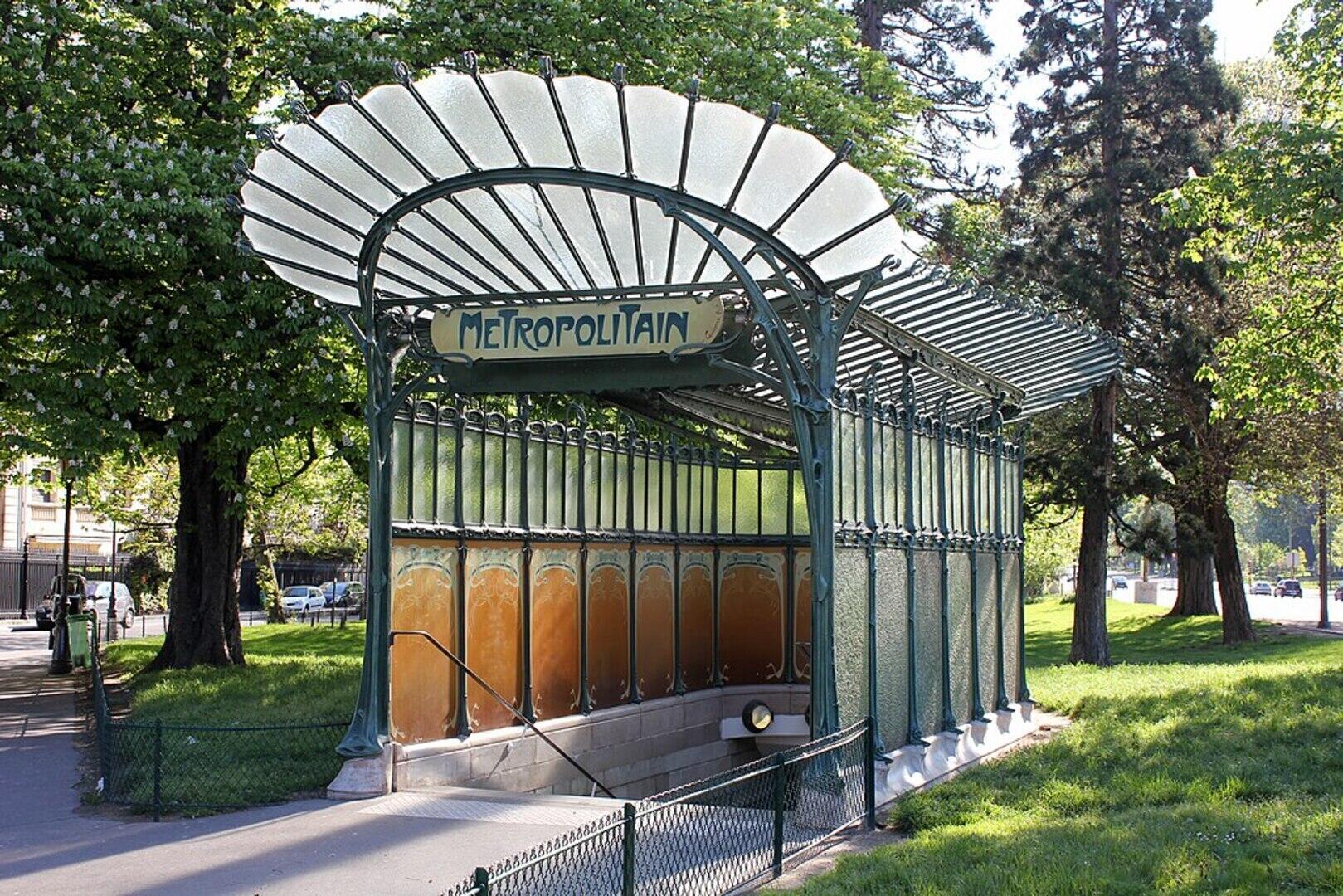
On July 19, 1900, Line 1 opened between Porte de Vincennes and Porte Maillot, carrying Parisians east-west beneath the city center. The response was immediate—within months, daily ridership exceeded projections. By 1910, eight lines crisscrossed Paris, distinguished by the Art Nouveau entrance pavilions designed by Hector Guimard. Those sinuous wrought-iron and glass canopies—"édicules" bearing the word MÉTROPOLITAIN in organic, flowing script—became instant icons, so distinctly Parisian that today, a century later, the surviving originals hold protected status.
The Métro's design philosophy emphasized density over distance. Stations cluster close together—an average of 562 meters apart—ensuring that no Parisian lives more than 500 meters from a station. This hyper-local approach differentiated Paris from London or New York. You don't ride the Métro to traverse great distances; you ride it to stitch together neighborhoods, to hop from the Latin Quarter to Montmartre, from Le Marais to Saint-Germain-des-Prés, treating the city as an interconnected whole rather than a collection of distant districts.
Key Milestones:
- July 19, 1900 – Line 1 opens for the Exposition Universelle
- 1910 – Nord-Sud Company launches competing lines (today's 12 and 13)
- 1930 – Network reaches first inner suburbs
- 1969 – RER A begins operation, integrating regional and urban rail
- 1998 – Line 14 (Météor) opens as first fully automated line
- Present – Ongoing automation and Grand Paris Express expansion
The Network Today
Modern Paris operates sixteen numbered lines (1 through 14, plus 3bis and 7bis), each identified by number, color, and terminal stations. Riders navigate by endpoint names—"Direction Château de Vincennes" or "Direction La Défense"—a system that initially confounds newcomers but becomes second nature. The network divides into zones (1–5), with central Paris occupying Zones 1 and 2. A single ticket t+ grants access to any journey within the Métro, with transfers allowed between lines for 90 minutes.
The RER (Réseau Express Régional) adds five regional express lines (A, B, C, D, E) that pierce through the city center, connecting distant suburbs and major hubs like Charles de Gaulle Airport and Versailles. Where the Métro moves deliberately between closely spaced stations, the RER races through longer stretches, stopping only at major intersections. The two systems interweave—RER and Métro share certain stations, creating transfer nodes where underground Paris becomes genuinely three-dimensional, platforms stacked vertically, corridors branching in multiple directions.
Line 1 holds particular distinction. Running east-west from La Défense to Château de Vincennes, it crosses the city's spine, passing the Louvre, Champs-Élysées, and Bastille. Fully automated since 2012, rubber-tired trains glide silently, their driverless cabs offering front-window views that transform commutes into urban theater. Line 6, meanwhile, surfaces between Passy and Nation, arcing above the Seine on the Pont de Bir-Hakeim—one of the few moments where the Métro becomes aerial, offering riders fleeting glimpses of the Eiffel Tower framed by steel girders.
Architecture and Atmosphere
Each station possesses distinct character. Some retain Belle Époque tiles and vintage signage—white ceramic with navy lettering, fonts unchanged since 1900. Others embrace contemporary design: Cluny–La Sorbonne displays replicas of medieval sculptures; Arts et Métiers encases platforms in copper plating, a Jules Verne-inspired steampunk submarine; Louvre–Rivoli exhibits museum-quality reproductions from the Louvre's collection. The Métro functions as accidental gallery, cultural sampler encountered between destinations.
Deeper than aesthetic variation runs operational rhythm. Morning rush hour (7:30–9:30 a.m.) packs cars to capacity. Platforms fill with silent commuters, each maintaining Parisian reserve, avoiding eye contact, absorbed in phones or paperbacks or middle-distance stares. Off-peak, the system relaxes—tourists study maps, teenagers cluster near doors, musicians set up in corridors hoping for coins. Late evening empties platforms entirely; the Métro closes around 1:15 a.m. weeknights, 2:15 a.m. weekends, plunging the system into temporary darkness before the overnight maintenance crews arrive.
The Métro has its own etiquette, largely unwritten but universally observed. Stand right, walk left on escalators. Yield priority seats (places prioritaires) to elderly passengers and those with disabilities. Let passengers exit before boarding. Fold your newspaper to elbow width. Speak quietly. These small courtesies maintain order in a system that moves millions daily through confined spaces, strangers momentarily sharing proximity before dispersing back into urban anonymity.
Modernization and Challenges
Automation defines the Métro's future. Following Line 14's success as the first fully automated line in 1998, Lines 1 and 4 have converted to driverless operation, with additional lines scheduled for conversion through 2030. Automation increases frequency—trains can run closer together without human fatigue limits—and improves safety, eliminating human error. But it also reshapes the job landscape, reducing station staff and altering the human dimension of public transit.
The Grand Paris Express, Europe's largest infrastructure project, will add four new automatic lines (15, 16, 17, 18) and extend existing ones, creating 200 kilometers of track and 68 new stations by 2030. The expansion prioritizes suburbs, addressing historical inequities where outlying districts lacked adequate connections to employment centers. This suburban focus marks a philosophical shift—from Bienvenüe's dense, central network to a more dispersed model that acknowledges Paris as a metropolitan region rather than a walled city.
Challenges persist. Accessibility remains incomplete—only about 30% of stations offer step-free access via elevators, a legacy of century-old infrastructure built before accessibility standards existed. Summer heat turns poorly ventilated stations into ovens; air conditioning exists on newer lines but not older rolling stock. Strikes occasionally paralyze service, a reminder that behind the mechanical precision stands human labor, unions with grievances, workers who keep the system running.
Experiencing the Métro
For visitors, the Métro offers efficiency and immersion. A carnet of ten tickets or a multi-day pass (Paris Visite or Navigo Découverte) provides flexibility. Study the map—color-coded lines, transfer stations marked with white circles—and you'll recognize patterns. The Seine divides Right Bank from Left Bank; Line 4 runs north-south along that axis. Châtelet–Les Halles forms the network's heart, where multiple lines converge in a subterranean cathedral of corridors.
Certain journeys become rituals. Line 1 from Louvre to Arc de Triomphe traces the historic axis. Line 12 to Montmartre deposits you at Abbesses, its Art Nouveau entrance and deep spiral staircase a pilgrimage for architecture enthusiasts. RER C to Versailles transforms transit into excursion, suburbs streaming past windows as the train leaves dense apartment blocks behind for the manicured grounds of the palace.
The Métro rewards observation. Notice the mosaic signatures at each station—unique typography, historical references embedded in tile. Watch how Parisians navigate without looking at signs, muscle memory guiding them through familiar labyrinths. Catch the busker at Châtelet performing Piaf, accordion echoing through tiled passages. Descend into the network expecting mere transportation and discover instead a parallel city, layered beneath the monumental Paris of postcards, equally essential to understanding how the capital lives and breathes.
"The Métro is more than transport—it's a social ritual, a shared experience that unites Parisians across class and arrondissement. Everyone rides the Métro."
Navigating Like a Local
Mastering the Métro begins with understanding its logic. Trains run approximately every 2 minutes during peak hours, 5–8 minutes off-peak. Electronic boards display wait times. The system operates Monday to Thursday 5:30 a.m. to 1:15 a.m., with extended hours Fridays, Saturdays, and eve-of-holidays until 2:15 a.m. Night buses (Noctilien) fill the gap when trains stop.
When planning routes, allow time for transfers—some stations sprawl across multiple levels and corridors, requiring several minutes to walk between platforms. Châtelet–Les Halles, Montparnasse–Bienvenüe, and République rank among the largest, their warren-like passages marked by endless yellow-on-blue Correspondance signs. Getting briefly lost in these mega-stations is a rite of passage; even Parisians occasionally emerge at the wrong exit.
Security and awareness matter. Pickpockets target crowded tourist lines (1, 4, 6) during peak hours. Keep bags zipped and close. Avoid empty carriages late at night—safety lies in numbers. Women traveling alone should note that while the Métro is generally safe, late-night rides merit extra vigilance. Trust your instincts; if a situation feels uncomfortable, change cars at the next station.
Experience This Attraction With Our Tours
One Journey integrates the Métro into several experiences, transforming transit from necessity into cultural education.
The Full Day Tour with Eiffel Tower, Metro Plus Montmartre makes the Métro central to the itinerary. After ascending the Eiffel Tower's second floor, your guide escorts you onto the Métro for a journey to Montmartre. This isn't simply getting from point A to point B—it's learning to navigate the system with confidence, understanding ticketing, transfers, and station etiquette. Your guide shares insights about the network's history, points out architectural details, and demonstrates how to move through the city like a Parisian. The tour concludes with a walking exploration of Montmartre and a gourmet lunch, but the Métro segment equips you with skills that enhance the rest of your Paris stay.
For those heading to the Fondation Louis Vuitton, the journey involves Metro Line 1 to Les Sablons—a prime example of using the network to reach Paris's more remote cultural gems. This experience emphasizes how the Métro unlocks neighborhoods beyond tourist centers, connecting you to contemporary art and architectural innovation in the 16th arrondissement.
The Versailles Escorted Tour utilizes RER Line C, demonstrating how Paris's regional rail integrates with the Métro system. Your escort manages all logistics—purchasing tickets, navigating platforms, explaining the difference between Métro and RER—ensuring a stress-free journey to the palace. This escorted experience particularly benefits first-time visitors who find the prospect of independent transit daunting, offering guided support while building confidence for future solo travel.
These tours recognize that understanding the Métro transforms your relationship with Paris. Rather than treating underground travel as an obstacle between attractions, they frame it as integral to the Parisian experience—a skill that opens the city, enabling spontaneous exploration long after the tour concludes.
Is It Worth Your Attention?
Absolutely. The Métro isn't an attraction in the traditional sense—no admission fee, no souvenir shop—but it functions as the city's most democratic space, the place where Paris reveals itself unfiltered. To ride the Métro is to participate in daily Parisian life, to move at the city's pace, to experience the democracy of public transit where everyone, regardless of means or status, shares the same platforms, the same rush-hour compression, the same moment of relief when you finally surface at your destination and breathe open air again. If Paris is a stage, the Métro is backstage—the machinery that makes the performance possible.
Traveler's Questions
How do I buy Métro tickets?
Purchase tickets at station windows or automated machines (credit cards accepted). A single ticket t+ covers any Métro journey within zones 1–2, with unlimited transfers between lines for 90 minutes. For extended stays, consider a carnet (10 tickets at a discount) or multi-day passes like Paris Visite or the rechargeable Navigo Découverte card.
Is the Métro safe?
Generally, yes. Millions ride daily without incident. Exercise normal urban precautions: watch for pickpockets on crowded tourist lines, keep belongings close, avoid empty carriages late at night. The system is well-patrolled, and most stations have staff presence during operating hours.
What are operating hours?
The Métro runs approximately 5:30 a.m. to 1:15 a.m. Sunday through Thursday, extending to 2:15 a.m. on Friday and Saturday nights and eves of public holidays. Plan accordingly—once the Métro closes, options reduce to taxis, ride-shares, or night buses (Noctilien).
Can I reach major airports by Métro?
RER B connects to Charles de Gaulle Airport (45–60 minutes from central Paris) and Orly Airport (via transfer to Orlyval). These require zone 5 tickets, more expensive than standard Métro fares. For Orly, alternative options include the Orlybus or tram connections. Always verify which terminal you need.
Is the Métro accessible for wheelchairs or mobility devices?
Accessibility remains limited—only about 30% of stations offer elevator access due to the network's age. Line 14 (the newest) provides full accessibility. RATP's website lists accessible stations and routes. For visitors with mobility challenges, buses and taxis may prove more practical alternatives, or contact One Journey for private transport arrangements.
For guided Métro experiences, transit assistance, and tours that incorporate Paris's underground network, contact our Tour Concierge at support@onejourneytours.com.