Prague Castle: Stories Carved Into the Czech Skyline
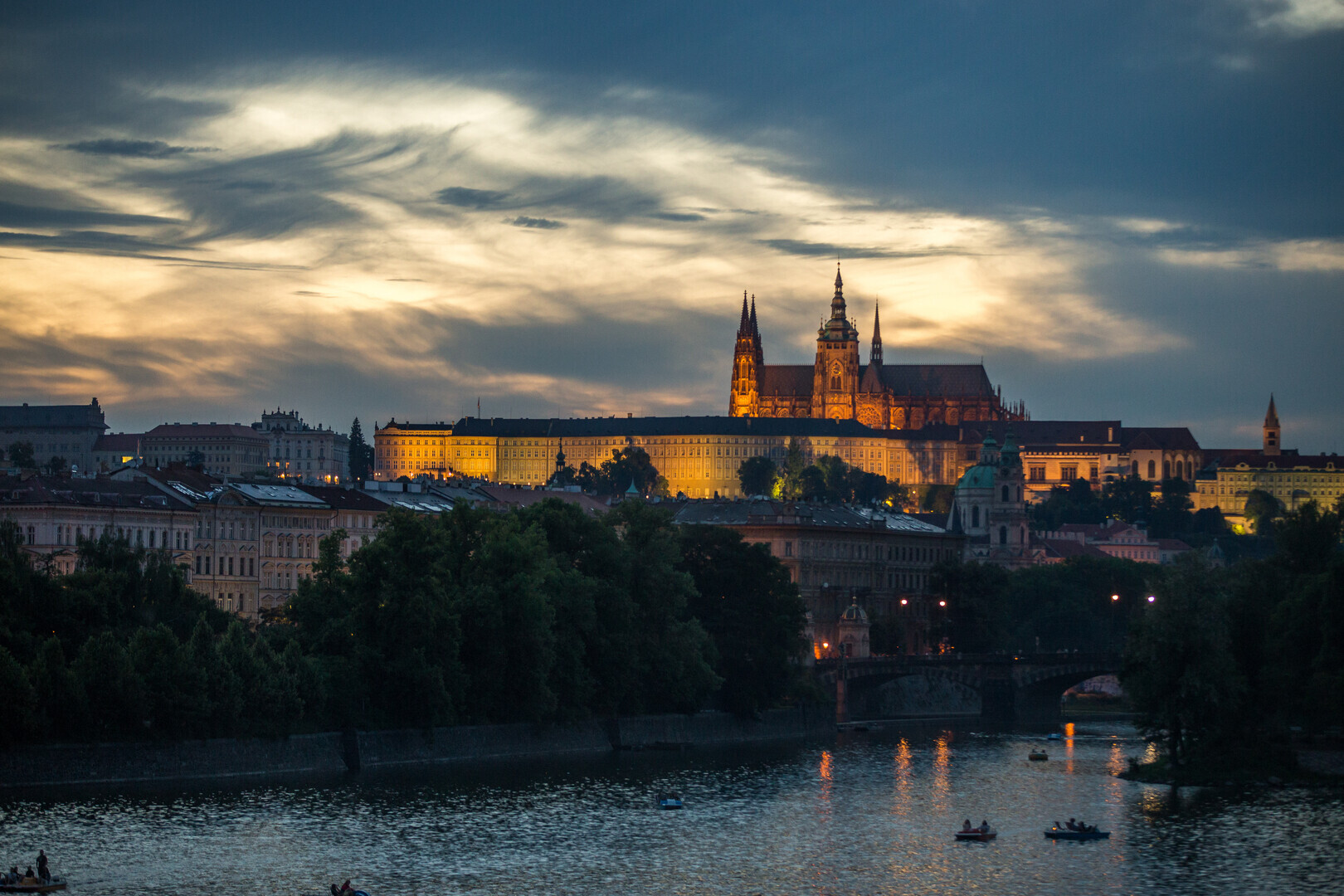
Dawn spills across the Vltava and the silhouette of Prague Castle crowns the skyline—a 9th-century citadel whose spires, courtyards, and gardens have choreographed Bohemia's political and spiritual life for more than eleven hundred years. Step through its fortified gates and you enter a palimpsest of Central European history: Romanesque chapels, Gothic vaults, Renaissance loggias, Baroque facades, and modern presidential offices fused into a single, sweeping complex that Guinness World Records recognizes as the largest ancient castle on earth, spanning nearly 70,000 square meters.
From Přemyslid Fort to Presidential Seat
Prague Castle began in 870 as a fortified seat for the Přemyslid dynasty, anchored by the Church of the Virgin Mary. Successive rulers expanded the compound: Dukes Vratislaus I and Wenceslaus established the Basilica of Saint George in the 10th century, while Holy Roman Emperor Charles IV ushered in a Gothic golden age in the 14th century, commissioning architect Peter Parler to begin the soaring St. Vitus Cathedral and strengthening the royal palace against external threats.
The Renaissance brought Habsburg refinement—Ferdinand I added the graceful Royal Summer Palace, and Rudolf II transformed the northern wing into the Spanish Hall to house his famed art and scientific collections. Maria Theresa's 18th-century renovation unified facades into the Baroque profile we admire today. Since 1918 the castle has served as the seat of the Czech presidency, reshaped by visionary architects Jože Plečnik and Pavel Janák for Tomáš Garrigue Masaryk and his successors.
Anchoring Centuries of Czech History
- 870: First fortified church and palace rise on the promontory.
- 1344: Construction of St. Vitus Cathedral begins under Charles IV.
- 1541: Devastating fire triggers Renaissance rebuilding under the Habsburgs.
- 1918: Castle becomes the seat of the newly formed Czechoslovak presidency.
- 2024: 2.59 million guests explore the complex, the Czech Republic's most visited site.
Architecture in Layers
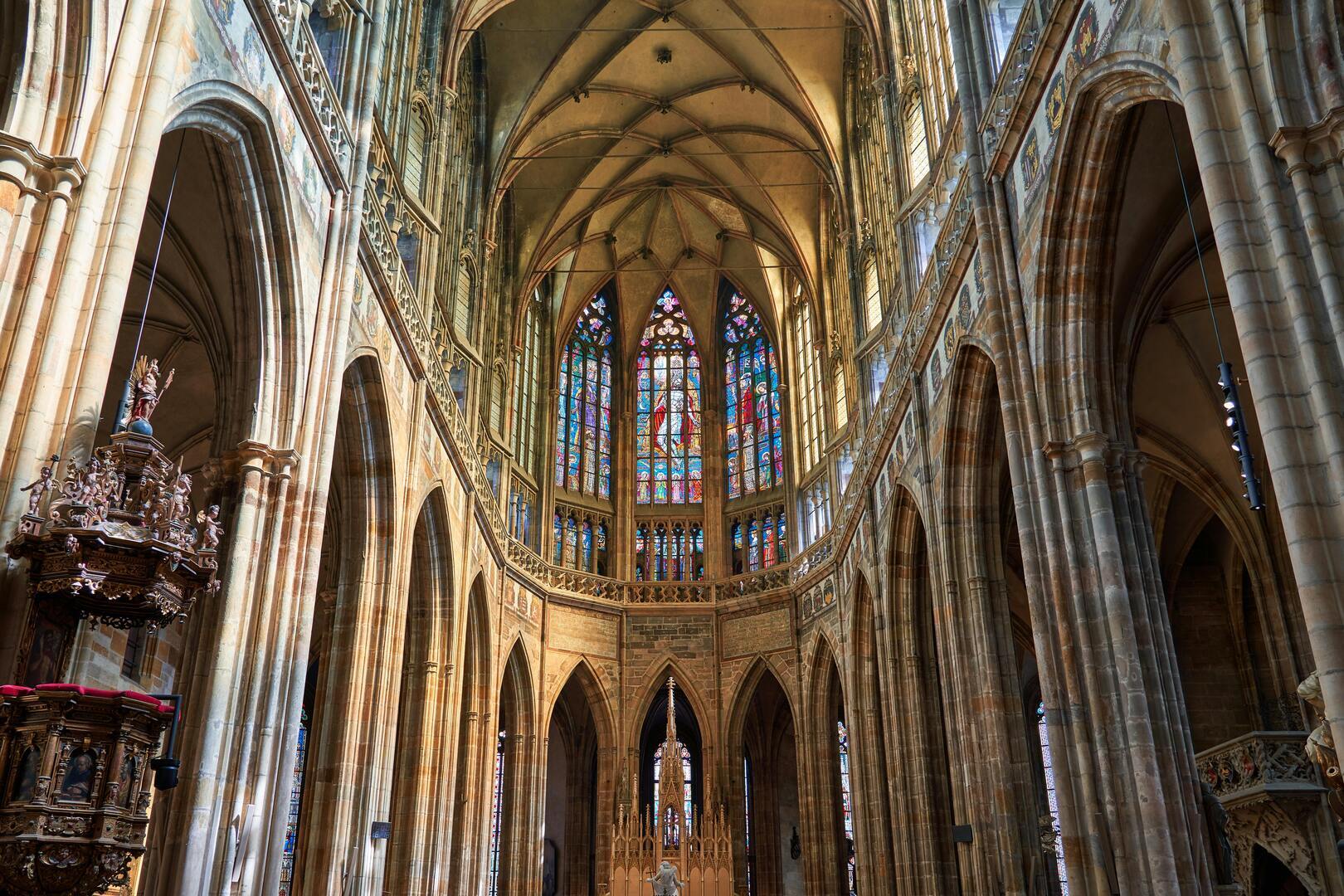
Prague Castle is not a single building but a hillside city. St. Vitus Cathedral's ribbed vaults, designed by Matthias of Arras and Peter Parler, crown the skyline with flying buttresses and stained glass by Art Nouveau master Alfons Mucha. The Old Royal Palace shelters Vladislav Hall, a late-Gothic marvel with a webbed stone ceiling and a staircase wide enough for mounted knights to parade indoors.
Wander south to find St. George's Basilica, where Romanesque red stucco meets 17th-century Baroque chapels, or stroll Golden Lane, a 16th-century lane of diminutive pastel houses once occupied by castle guards, goldsmiths, and briefly Franz Kafka. Across the courtyards, the neoclassical New Royal Palace frames official state functions, while manicured gardens tumble toward the Mala Strana, offering terraces with serene river views.
Moments That Shaped the Castle
Prague Castle has stood witness to coups, coronations, and cultural renaissances. The Third Defenestration in 1618—when Bohemian nobles hurled imperial officials from a palace window—ignited the Thirty Years' War. During World War II, the occupiers hoisted the Nazi flag above the complex, while resistance fighters planned Operation Anthropoid beneath its shadow. In 1989, the Velvet Revolution's leaders crossed the courtyards to negotiate the end of communist rule. Today, the castle hosts the Changing of the Guard every hour, a choreographed ritual that underscores its living political role.
“Within these walls, the Czech lands have negotiated their identity—through empires and republics, wars and Renaissance courts, the castle endures as Prague's compass.”
Practical Insights for Exploring
The castle complex opens daily from the early morning, while interior sites operate on seasonal timetables—expect St. Vitus Cathedral to close earlier in winter (usually around 4 p.m.) and later in summer (up to 6 p.m.). Security screening is mandatory at each gate, so allow extra time during weekends and holidays. Tickets are structured in circuits; Circuit B (St. Vitus Cathedral, Old Royal Palace, St. George's Basilica, and Golden Lane) covers the essential highlights and suits most first visits.
Arrive from the lesser-crowded eastern entrance near the Royal Garden to enjoy a gentle downhill stroll through manicured terraces before descending toward the cathedral. For breathtaking dawn views, reach Hradčany Square before opening time and watch the city awaken beneath the spires.
Design Your Castle Experience
Begin in the First Courtyard, where the Castle Guard and Matthias Gate stage a grand introduction. Continue into the Second Courtyard to admire Plečnik's Presidential Balcony and descend beneath the cathedral to the Gothic treasury. Within St. Vitus, trace the evolution of stained glass from medieval rose windows to Mucha's 20th-century Art Nouveau masterpiece.
After the cathedral, cross to the Old Royal Palace to stand beneath the 62-meter-long Vladislav Hall, then slip into the vaulted Chapel of St. Wenceslas, where inlaid semi-precious stones guard the Czech patron saint's tomb. Golden Lane offers a more intimate counterpoint: tiny 16th-century cottages now house interpretive exhibits about castle life. Conclude with a stroll through the South Gardens, pausing at the Bulls Staircase to watch trams glide along the riverbank below.
Itinerary Inspiration Around the Castle
A perfect morning starts with espresso on Hradčanské náměstí before you cross the castle threshold at opening time, lingering in the quiet nave of St. Vitus while shafts of light ignite the choir. Late morning, explore the picture galleries tucked into the palace arcades, then exit toward the cobbled Nerudova Street for a lunch of Moravian wine and roast duck.
Afternoon finds you wandering the Lesser Town's baroque gardens—Vrtba or Wallenstein—before recrossing the Charles Bridge toward Old Town Square for sunset bells at the Astronomical Clock. After dark, circle back to the castle's ramparts: illuminated towers mirrored in the Vltava offer one of Prague's most cinematic vistas.
Experience This Attraction With Our Tours
Our Private Visit to Prague Castle unlocks the citadel after closing, when courtyards fall silent and stained-glass windows glow from within. Your personal curator arranges expedited security, tailors the evening to two landmark spaces—perhaps the royal vaults of St. Vitus and the Renaissance drama of Vladislav Hall—and concludes with champagne and canapés overlooking the city lights.
Chauffeured transfers and an English-speaking expert ensure the experience feels bespoke, whether you are celebrating a milestone or deepening your understanding of Czech heritage. For travelers who wish to pair the castle with the National Theater or Klementinum, our concierge can extend the evening into a custom itinerary that threads Prague's cultural icons together with effortless logistics.
Is It Worth Visiting?
Absolutely. Prague Castle is less a single monument and more a living anthology of Czech art, faith, and statehood. Whether you seek the hush of ancient chapels, the drama of imperial halls, or the panorama of river and rooftops, the complex distills Prague's layered identity into one walkable hillside. Allocate the time it deserves—you will leave with the city's story etched far deeper than any postcard view.
Traveler's Questions
When is the best time to arrive?
Reach the security checkpoints by 8:30 a.m. to enter as interiors open, or plan a late-afternoon visit an hour before closing when tour groups have thinned and the courtyards glow in golden light.
Which ticket circuit should I choose?
Circuit B includes St. Vitus Cathedral, Old Royal Palace, St. George's Basilica, and Golden Lane—ideal for first-time guests. Upgrade to Circuit A if you want to add the Picture Gallery for Renaissance and Baroque masterworks.
Are guided tours available on-site?
Audio guides and group tours depart from the information centers, but private guides can be arranged in advance for tailored storytelling and smoother navigation through security and ticketed zones.
Can I see the Bohemian Crown Jewels?
The Crown Jewels reside behind a sealed door within St. Vitus Cathedral and emerge only for rare state occasions. While they are typically not on display, the cathedral's Chapel of St. Wenceslas houses the jewel chamber's ornate doorway and richly decorated walls.
Is the castle accessible?
The courtyards feature manageable gradients, but cobblestones and staircases inside historic buildings can pose challenges. Accessible entrances are available at the Second Courtyard, and staff can advise on step-free routes; consider a private guide if you need tailored pacing or mobility support.
For bespoke access, after-hours experiences, or curated cultural pairings across Prague, connect with our Tour Concierge at support@onejourneytours.com.