Prague's National Theatre: Where a Nation Takes the Stage
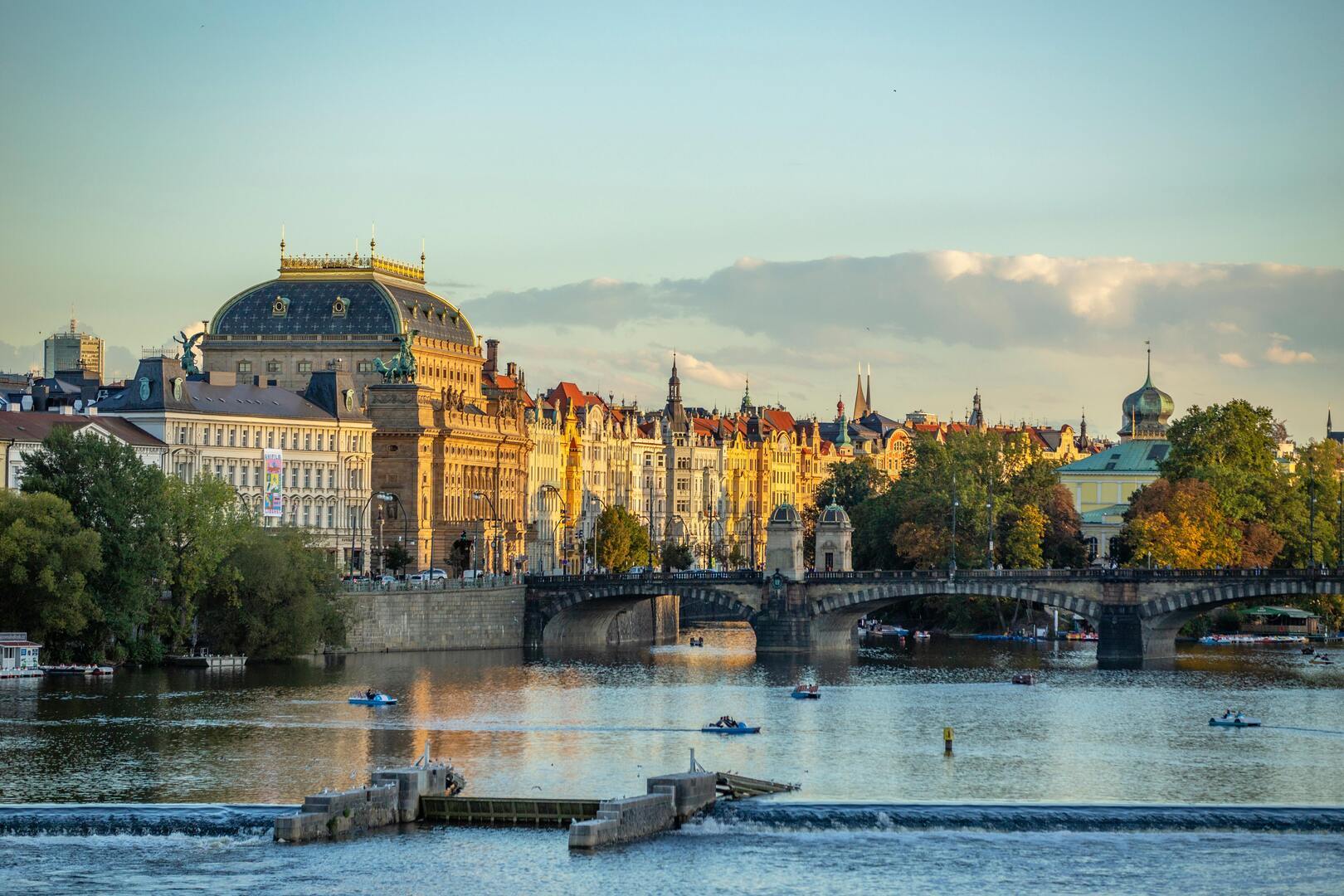
The Vltava shimmers beneath the gilded rooftop of the National Theatre, its burnished crown glowing like a promise. Inside, velvet curtains, frescoed ceilings, and the whispers of past premieres reveal how this neo-Renaissance landmark became the heartbeat of Czech culture—a stage built by public will, scarred by fire, resurrected by collective pride, and today alive with opera, ballet, and drama that continue to define Prague's identity.
A People's Pledge Brought to Life
The idea of a national theatre emerged in 1844 when Czech patriots imagined a space that could celebrate their language and arts at a time when the Habsburg Empire dominated civic life. Fundraising campaigns, lotteries, and public subscriptions followed, culminating with a ceremonial laying of the cornerstone on 16 May 1868—an event that drew tens of thousands who believed culture could be a rallying force for sovereignty.
Architect Josef Zítek's neo-Renaissance design opened to triumphant acclaim on 11 June 1881 with Bedřich Smetana's opera Libuše. Yet three months later, a devastating fire gutted the interior, threatening to extinguish the fledgling institution. Within 47 days, a renewed wave of national fundraising financed the restoration under architect Josef Schulz, and on 18 November 1883, the National Theatre reopened—again with Libuše, now a symbol of resilience and shared determination.
Essential Dates & Figures
- 1844 – Czech patriots launch the campaign for a national theatre.
- 16 May 1868 – Cornerstone laid with stones from across the Czech lands.
- 11 June 1881 – Grand opening, followed by a destructive fire on 12 August.
- 18 November 1883 – Reopening after rapid reconstruction guided by Josef Schulz.
- 1977–1983 – Extensive modernization meets the theatre's centennial deadline.
- Capacity: approximately 986 seats beneath a 50-metre copper-clad roof.
Layered Architecture and Artistic Detail
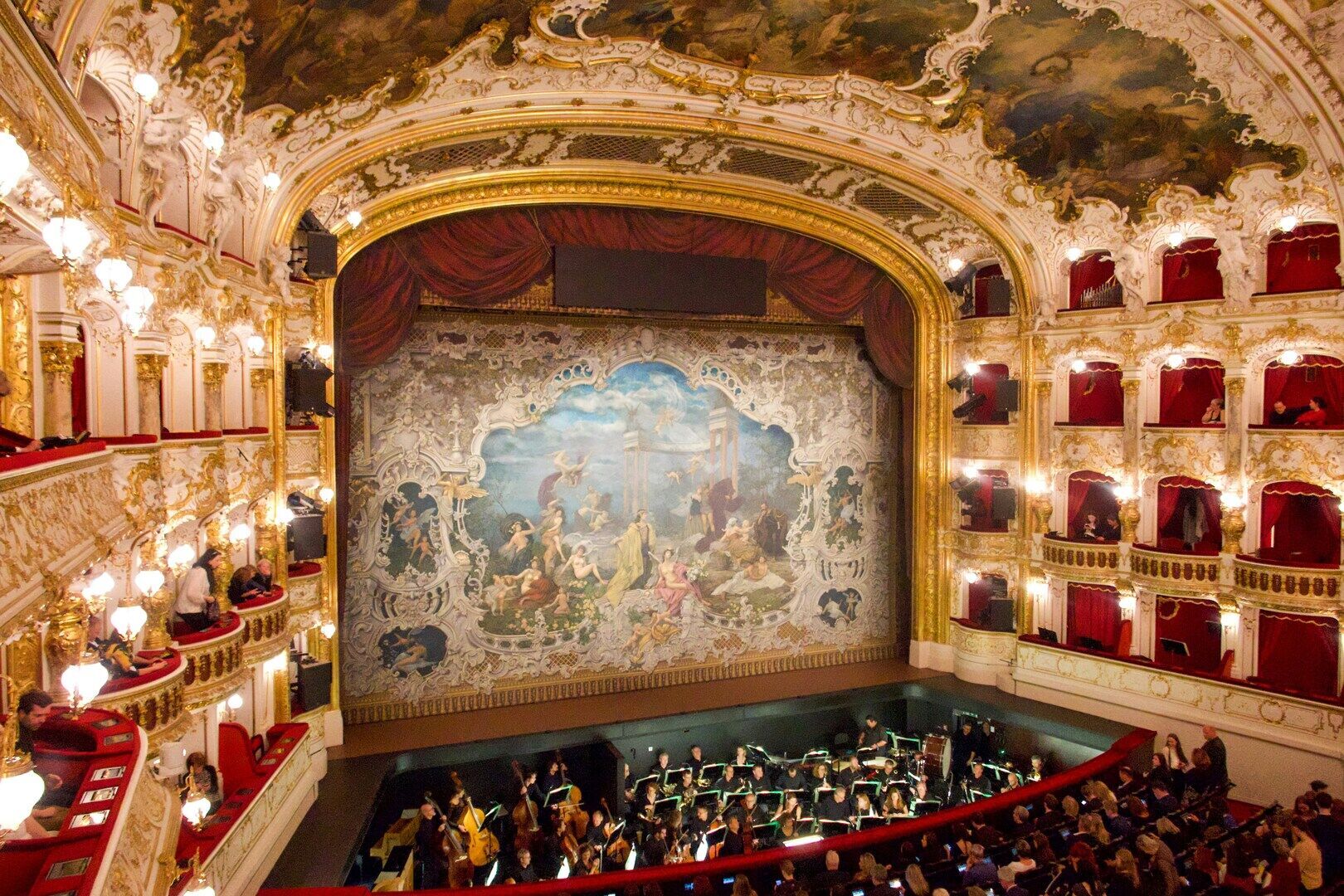
Step through the Národní entrance and the foyer unfolds in marble symmetry, gilded cornices, and allegorical murals by Mikoláš Aleš and František Ženíšek. The auditorium's three horseshoe balconies—latticed with gold leaf—frame a stage set beneath a glittering crystal chandelier. Above it all, the roofline's triga statues charge toward the river, a heroic tableau of Apollo driving the arts forward.
Throughout the building, Czech artistry holds court: sculptor Bohuslav Schnirch's stone guardians, mosaics celebrating Slavic mythology, and the monumental curtain painted by Vojtěch Hynais after the 1881 fire, depicting a triumphant “Homage to the Nation.” Even the modern annex, added during late-1970s renovations and completed by architect Zdeněk Vávra, balances contemporary functionality with the historic fabric—housing rehearsal studios, box office, and administrative suites without detracting from the landmark facade.
Stages of Renewal and Cultural Milestones
The theatre has mirrored Czech history. During World War II, performances offered subtle resistance, while post-war years saw repertoire shifts aligned with political change. In 1983, a six-year renovation reinstated original frescoes, upgraded stage machinery, and introduced acoustic enhancements just in time for the centenary performance—once more, fittingly, Smetana's Libuše.
More recently, the theatre and State Opera navigated leadership debates, including the 2019 protests around artistic direction, underscoring how passionately the creative community guards this institution. Today, three ensembles—opera, ballet, and drama—alternate productions across the historic house, the State Opera, the Estates Theatre, and the Kolowrat Theatre, shaping a repertory that spans baroque courtly dances, Janáček operas, and contemporary Czech drama.
“To stand in the National Theatre is to feel Prague's voice—steadfast, resilient, and exquisitely lyrical.”
How to Experience the National Theatre
Before the Curtain Rises
Book tickets early, especially for cornerstone works like Dvořák's Rusalka or modern ballet premieres. Opt for balcony seats to appreciate the full sweep of the auditorium, or choose stalls for a direct view of the orchestra pit where principal conductor Jaroslav Kyzlink often leads.
During Intermission
Slip into the gilded lounges to admire allegorical frescoes or step out onto the terrace overlooking the Vltava. From here, the copper roof's triga statues seem almost within reach, and the lights of Charles Bridge shimmer upriver.
Stay a Little Longer
After the final applause, extend the night with a stroll down Národní třída toward Café Slavia, historically the artists' haunt. The theatre's illuminated facade from this angle captures precisely why locals call it “the golden chapel.”
A Gentle Itinerary Around the Theatre
Begin late afternoon with a walk across Legion Bridge, letting the theatre's copper dome and sculpted horses anchor the skyline. Arrive early to visit the foyer exhibition tracing past productions, then take your seat for an evening performance—opera, ballet, or drama depending on the season. Post-show, wander along the river toward Kampa Island or ascend Petřín Hill for night-time views that place the glowing theatre in its full cityscape. The following day, deepen the narrative with a visit to the National Museum or Estates Theatre, both part of the National Theatre family, to see how Czech culture stretches from royal salons to revolutionary stages.
Experience This Attraction With Our Tours
One Journey's Private Visit to the National Theater offers an after-hours encounter curated for travelers who crave context and exclusivity. Your evening begins with chauffeured arrival, continues through marble foyers and foundation stones usually closed to the public, and culminates beside the rooftop triga statues with champagne in hand. Along the way, an expert guide narrates the theatre's turbulent history, pointing out restored frescoes, hidden rehearsal corridors, and the symbolism woven into the Hynais curtain—insights that only insiders can provide.
The experience is intimate, timed to capture the theatre in hushed stillness once the last audience departs. It is less a tour and more a dialogue with the building itself: a chance to trace the footsteps of performers, peek behind the proscenium, and understand why the National Theatre remains the spiritual stage of the Czech Republic.
Is It Worth Visiting?
Absolutely—whether you are drawn by architecture, opera, or the story of a nation built through culture. The National Theatre is Prague's living manifesto that art can anchor identity. Even without a performance, a guided visit reveals craftsmanship and collective memory at every turn. With a performance, the house vibrates—the orchestra tuning, the audience murmuring in Czech, the curtains lifting to reveal worlds conjured by librettists and choreographers. Few theatres embody civic spirit quite so completely.
Traveler's Questions
How early should I arrive for a performance?
Doors typically open 30 minutes before curtain. Arriving early allows time to check coats, explore the foyer galleries, and settle into seats without missing the orchestral prelude.
Is there a dress code?
Smart attire is customary—think cocktail dresses, tailored jackets, or elegant separates. Formal wear adds to the atmosphere but is not strictly required unless specified for gala evenings.
Can I tour the theatre without attending a performance?
Yes, daytime guided tours (often in English) reveal backstage areas, the royal box, and restored décor. Private visits, like One Journey's after-hours experience, provide deeper access to typically closed sections.
Are performances surtitled in English?
Most opera and some drama productions feature surtitles in Czech and English. Confirm specifics when booking, especially for contemporary works where translations may vary.
What is the best way to reach the theatre?
Tram lines 6, 9, 17, and 22 stop at Národní divadlo. The Národní třída metro station (Line B) lies a short walk away. Private transfers are included with One Journey's experience for a seamless arrival.
Ready to explore Prague's cultural heart? Connect with our concierge at support@onejourneytours.com to arrange premium seats, curated tours, or bespoke evenings inside the National Theatre.