Christmas in Paris: A Season of Light, Magic, and Tradition
Paris in December transforms into something beyond its usual elegance—a city where centuries of tradition meet contemporary celebration, where boulevards glitter with thousands of lights, and where the aroma of vin chaud and roasted chestnuts drifts through crisp winter air. The City of Light earns its name most fully during the holiday season, when illuminations cascade down the Champs-Élysées, Christmas markets fill historic squares, and department store windows become theatrical masterpieces. This isn't the high season bustle of summer Paris, when tourists crowd monuments and restaurant terraces overflow. Winter Paris belongs more to those who seek atmosphere over mere sightseeing—couples strolling hand-in-hand past glowing shopfronts, families gathered around market chalets sipping hot chocolate, solo travelers romanticizing their lives amid the festive ambiance. The experience blends quintessentially Parisian sophistication with the universal warmth of holiday celebration: designer boutiques draped in lights, historic churches hosting candlelit concerts, and centuries-old traditions of seasonal markets offering handcrafted gifts and regional specialties. Christmas in Paris rewards those who embrace both its grandeur and its intimacy, who appreciate that the magic lies as much in wandering illuminated streets as in visiting famous attractions, and who understand that the season's appeal comes from how the city balances timeless tradition with modern celebration.
Paris's Holiday Heritage: From Medieval Markets to Modern Magic
Christmas celebrations in Paris trace their roots to medieval winter markets, when merchants gathered before the Feast of Nativity to sell goods needed for holiday preparations. These early markets offered candles for illuminating dark December nights, ingredients for traditional réveillon feasts, and religious items for home altars. The tradition evolved through centuries, surviving revolution, empire, and occupation, adapting to each era while maintaining its essential character as gathering place for seasonal commerce and community celebration.
The modern concept of Parisian Christmas markets emerged in the late 19th century, influenced by Alsatian traditions—the region's Germanic heritage brought elaborate Christmas customs that gradually spread throughout France. After World War I, when Alsace returned to French sovereignty, these traditions gained wider acceptance in Paris itself. Department stores like Galeries Lafayette and Printemps, established in the mid-1800s, revolutionized holiday shopping by creating elaborate window displays that transformed commercial spaces into theatrical experiences. This tradition continues today, with windows becoming annual attractions drawing crowds who gather to witness unveiling ceremonies in late November.
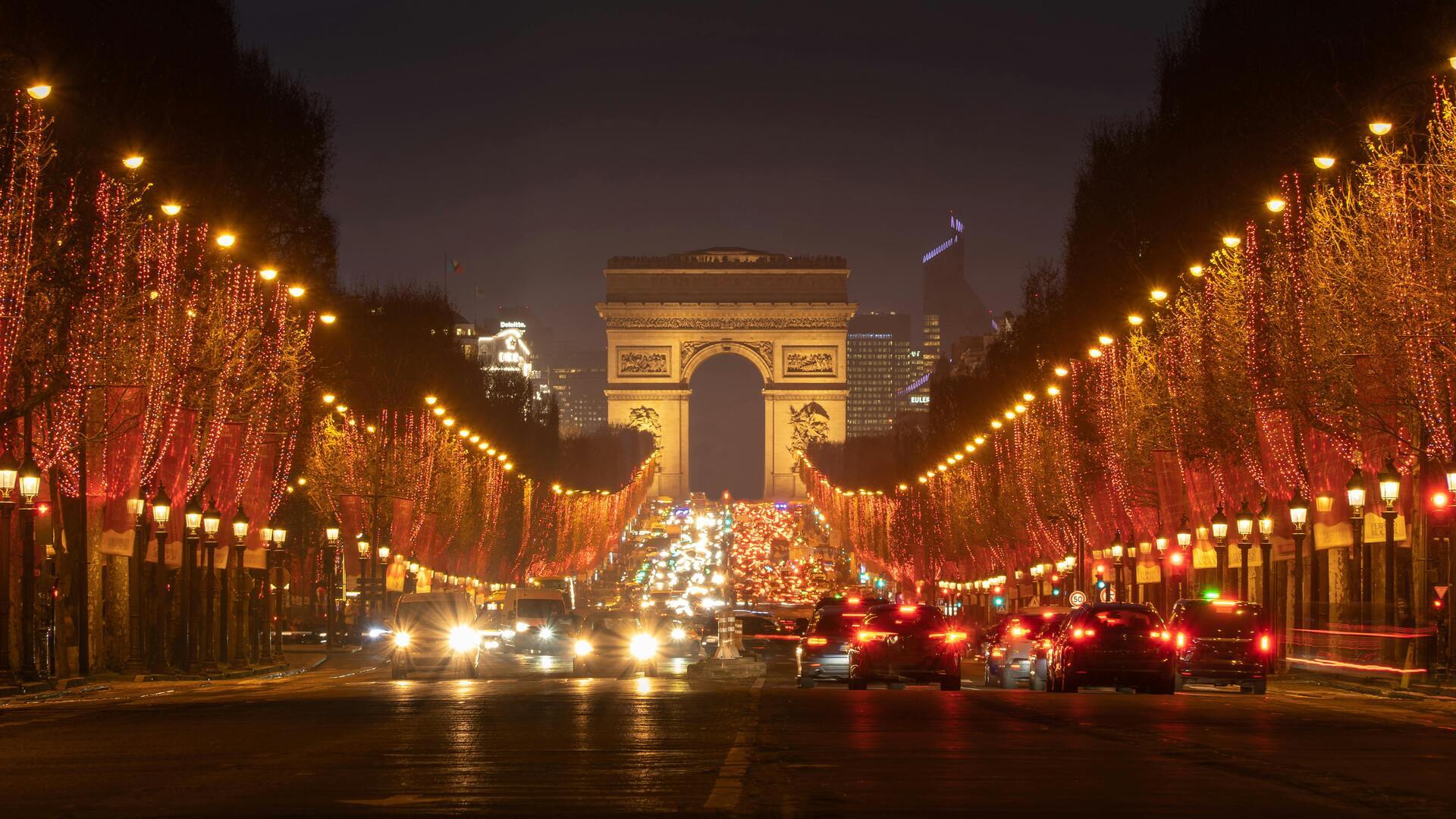
The Champs-Élysées received its first formal illuminations in 1913, though the tradition was interrupted by wars and only became the spectacular annual event we know today in the 1980s. Now, over 400 trees lining the avenue are wrapped with thousands of LED lights, creating a luminous canopy that extends nearly two kilometers from Place de la Concorde to the Arc de Triomphe. The illuminations typically debut in late November during a ceremonial lighting—the illuminations de Noël—and remain through early January, transforming the famous boulevard into Paris's most iconic Christmas destination.
Christmas in Paris: Key Dates and Timeline
- Late November: Champs-Élysées illuminations ceremony and Christmas market openings
- November 29–December 25: Peak season for Christmas markets and holiday tours
- December 6: Saint Nicholas Day, traditional children's gift-giving in parts of France
- December 24: Réveillon de Noël (Christmas Eve feast), the main French holiday celebration
- December 25: Christmas Day, typically quieter and family-focused
- December 31: New Year's Eve celebrations on Champs-Élysées
- Early January: Decorations and markets typically close by January 2-3
The Illuminations: Paris Dressed in Light
The Champs-Élysées illuminations represent Paris's most spectacular holiday tradition. Each year, the avenue transforms into a luminous corridor stretching from the Place de la Concorde—where the ancient Egyptian obelisk stands sentinel—to the Arc de Triomphe, its classical proportions framed against the winter sky. The effect is neither garish nor subdued but rather elegant, sophisticated, quintessentially Parisian. Thousands of LED lights wrap around plane trees lining the boulevard, creating overhead canopies that shift in color and pattern throughout the evening. Walking beneath them feels like moving through a tunnel of stars, with the Arc de Triomphe glowing ahead as destination and reward.
Avenue Montaigne, the luxury shopping street branching off the Champs-Élysées roundabout, offers its own display—more intimate but equally impressive. High-fashion houses like Dior, Chanel, and Louis Vuitton dress their boutiques in holiday finery that manages to be both festive and refined. Some create elaborate window installations; others opt for minimalist elegance with precisely placed lights accentuating architectural details. The Hôtel Plaza Athénée, the legendary palace hotel Taylor Swift references in "Elizabeth Taylor," illuminates its facade with understated glamour, while inside, Le Bar serves handcrafted cocktails and champagne in an atmospheric blue setting perfect for escaping winter cold.
Place Vendôme, the octagonal square famous for luxury jewelry houses and the Ritz Paris, presents perhaps the most refined Christmas décor in the city. The approach here is restrained but impeccable: glittering trees positioned strategically, lights enhancing rather than overwhelming the square's classical architecture, window displays from Cartier, Van Cleef & Arpels, and Chaumet that showcase jewelry alongside seasonal artistry. This is Paris at its most polished—wealth, taste, and tradition converging in a setting that appears both timeless and very much of this particular season.
Rue Saint-Honoré connects Place Vendôme to the Tuileries Garden, and this street too participates in the holiday transformation. Beyond the designer storefronts—Dior's glittering facade is particularly striking—you'll find smaller shops, cafés, and patisseries all contributing to the festive atmosphere. This is where the holiday spirit feels most integrated into daily Parisian life rather than staged for tourists, where locals shop for gifts, meet for coffee, and navigate their city through its annual seasonal transformation.

The Christmas Markets: Tradition Meets Celebration
Parisian Christmas markets blend Alpine chalet aesthetics with French culinary sophistication, creating experiences that satisfy both tradition-seekers and gourmands. These temporary villages of wooden stalls appear throughout the city from late November through early January, each offering variations on familiar themes: handcrafted gifts, regional food specialties, warming beverages, and that particular atmosphere of communal celebration that transcends cultural boundaries. The best markets balance commercial activity with genuine festivity, providing reasons to linger beyond mere shopping.
The Champs-Élysées market, while criticized by purists as overly commercial, remains popular for its sheer scale and location. Over 200 chalets line the avenue from the Rond-Point to the Place de la Concorde, offering everything from artisanal cheeses to Christmas ornaments to carnival rides for children. The emphasis here tilts toward accessibility and crowd-pleasing variety rather than artisanal authenticity, but the setting—beneath those famous illuminations, with the Arc de Triomphe visible at one end—provides undeniable appeal. Come during weekday afternoons to avoid peak crowds, and focus on food and drink offerings: hot vin chaud spiced with cinnamon and orange, tartiflette (the Savoyard potato, bacon, and cheese casserole), roasted chestnuts, and endless varieties of sausages representing various French regions.
The Tuileries Garden transforms each winter into a combination Christmas market and winter carnival, with the Grande Roue—a massive Ferris wheel—offering panoramic views across central Paris. This market feels more family-oriented, with fairground rides, game booths, and food stalls emphasizing treats children love: churros, crêpes, hot chocolate piled with whipped cream. The setting is magnificent: the formal gardens designed by André Le Nôtre frame the market, the Louvre's classical facades provide backdrop, and the Eiffel Tower rises in the distance. Come at twilight when lights illuminate the rides and the Louvre begins its own evening glow.
For more intimate experiences, seek smaller neighborhood markets. The Square René Viviani market, nestled behind Notre-Dame with views of the cathedral's restoration progress, offers genuine charm in a compact setting. This market emphasizes quality over quantity: carefully curated artisan vendors, tastings of regional products, and a sense that you've discovered something beyond the obvious tourist circuit. The surrounding Latin Quarter provides additional appeal—narrow medieval streets, historic bookshops, cozy cafés—making this an ideal destination for those seeking authentic Parisian atmosphere alongside holiday cheer. The market's proximity to Notre-Dame adds poignancy; the cathedral's ongoing restoration serves as reminder of Paris's resilience and commitment to preserving heritage even amid celebration.
"Christmas in Paris is less about grand gestures than atmospheric moments: steam rising from a cup of vin chaud, lights reflecting off rain-slicked cobblestones, the sound of carolers echoing through covered passages, the particular warmth of a café when you step in from December cold."
Beyond Markets: Department Stores, Churches, and Seasonal Delights
The department stores represent another essential Paris Christmas tradition, with Galeries Lafayette and Printemps competing annually to create the most spectacular window displays. These aren't mere commercial decorations but genuine works of art: elaborate animated scenes telling stories, showcasing craftsmanship in miniature set design, costume, and mechanical animation. Galeries Lafayette typically unveils its windows in early November, drawing crowds who queue along Boulevard Haussmann to view each display. The store's interior is equally impressive—a stunning Belle Époque atrium crowned by a stained-glass dome, around which rises a central Christmas tree that reaches multiple floors, decorated according to an annual theme. Entrance is free; come early morning or late afternoon to avoid peak crowding.
Printemps, across the boulevard, offers comparable spectacle with its own approach to window artistry and interior decoration. The seventh-floor terrace provides panoramic views across Paris—the Eiffel Tower, Sacré-Cœur, the Opéra Garnier—that reward the climb (or elevator ride). Both stores become destinations in themselves during December, blending serious shopping with theatrical entertainment. Even if you purchase nothing, witnessing these displays provides insight into French luxury, craft tradition, and how commerce and art intersect in Parisian culture.
Paris churches offer respite from commercial celebration through concerts, midnight Mass, and contemplative beauty. Sainte-Chapelle, the Gothic jewel box of stained glass in the Île de la Cité, hosts candlelit classical concerts throughout December—Vivaldi's Four Seasons, Bach cantatas, French baroque music—in a setting of incomparable beauty. Saint-Sulpice, the massive Left Bank church featured in The Da Vinci Code, offers organ concerts utilizing one of France's finest instruments. Notre-Dame remains closed for restoration, but the square before it hosts outdoor exhibits documenting reconstruction progress, creating a different sort of pilgrimage for those who remember the cathedral before the 2019 fire.
For culinary traditions, seek out bûche de Noël—the Yule log cake that appears in every Parisian pâtisserie come December. These rolled sponge cakes filled with cream or mousse and decorated to resemble tree bark range from traditional to avant-garde, with top pastry chefs creating architectural confections that challenge the definition of cake. Pierre Hermé, Ladurée, and Angelina all produce versions worth sampling. The tradition dates to medieval times when families burned a real log through Christmas night; the cake version emerged in 19th-century bourgeois households, demonstrating French talent for transforming rustic custom into refined gastronomy.

Crafting Your Christmas Paris Itinerary
A thoughtful Christmas visit to Paris balances iconic experiences with personal exploration, leaving room for spontaneous discovery while hitting essential highlights. Begin your day late morning to avoid early winter darkness—Paris doesn't fully wake until 9:00 or 10:00 a.m. in December regardless. Start with the Galeries Lafayette windows, arriving by 10:30 a.m. when crowds remain manageable. Spend an hour viewing displays, ascending to the terrace for city views, and exploring the interior dome and Christmas tree. Cross Boulevard Haussmann to Printemps for their windows and rooftop views, completing the department store circuit by early afternoon.
From Printemps, walk or metro to the Tuileries Garden Christmas market (Métro Tuileries or Concorde). Arrive by 2:30 p.m. to enjoy the market in daylight before evening crowds. Sample food offerings—crêpes, hot chocolate, regional cheeses—and consider riding the Grande Roue for aerial perspectives across Paris. As daylight fades around 5:00 p.m. (sunset comes early in December), make your way to the Champs-Élysées, either walking through Place de la Concorde or taking Métro Line 1 to Champs-Élysées–Clemenceau. The illuminations glow most beautifully during the blue hour immediately after sunset and into evening. Walk the length of the avenue, pausing at the Christmas market chalets that interest you, with the Arc de Triomphe as your destination.
For a more intimate second day, focus on the Latin Quarter and Notre-Dame area. Begin at Saint-Germain-des-Prés (the neighborhood and its famous church), exploring antique shops, bookstores, and cafés. Cross to the Île de la Cité to view Notre-Dame's exterior and restoration exhibits. If you've booked tickets, attend an afternoon concert at Sainte-Chapelle—the stained glass creates magical effects even on gray December days. From there, it's a short walk to the Square René Viviani Christmas market, where the intimate scale and authentic atmosphere provide contrast to larger, more commercial markets. The surrounding Latin Quarter offers countless options for dinner—traditional bistros, contemporary restaurants, casual wine bars—making this area ideal for evening exploration.
Reserve one evening for a concert, ballet, or opera. The Palais Garnier, the stunning 19th-century opera house, offers both performances and self-guided tours; its grand staircase and chandelier-lit auditorium embody Second Empire opulence. The Opéra Bastille provides a more modern setting for opera and ballet. Church concerts—particularly at Sainte-Chapelle, Saint-Sulpice, or Église de la Madeleine—offer classical music in atmospheric settings at accessible prices. Book tickets in advance for popular performances, as Christmas season sells out quickly. Most concerts begin at 7:00 or 8:00 p.m., leaving late afternoon free for final market visits or museum explorations.
Practical Considerations for Christmas in Paris
December weather in Paris hovers between cold and very cold—daytime temperatures typically range from 35-45°F (2-7°C), with frequent overcast skies, occasional rain, and rare snow. Layer clothing: base layer, insulating sweater, waterproof jacket, scarf, gloves. Comfortable, waterproof walking shoes with good traction are essential; Paris sidewalks become slippery when wet, and you'll walk several miles daily. The city rarely gets snow accumulation, but when it does in late December or January, Paris transforms into something fairy-tale beautiful, with snowflakes settling on monument domes and market chalets—worth the cold if you're fortunate enough to witness it.
Crowds peak during the final weekend before Christmas, particularly at Champs-Élysées and department stores. The period between Christmas and New Year remains busy but becomes more manageable. Early January, before markets close, offers the quietest experience with full decorations still in place. Most Christmas markets operate daily from late November through early January, typically 11:00 a.m. to 10:00 p.m., though hours vary by location. Restaurants, shops, and attractions follow modified schedules around Christmas Eve and Christmas Day—many close December 25 or offer limited hours—so plan accordingly or embrace the opportunity to experience Paris at its quietest.
Budget considerations: Markets offer items at wide price ranges, from €3 hot chocolate to €50 artisanal gifts. The Champs-Élysées market tends toward higher prices; neighborhood markets offer better value. Most vendors accept cards, but carry cash for smaller purchases. Department store viewing is free, making it an excellent budget-friendly activity. Church concerts range from free (donations appreciated) to €20-40 for ticketed performances at Sainte-Chapelle or Opéra Garnier. Museum admission continues year-round with regular pricing; most offer free entry for EU residents under 26 and everyone under 18. Plan on €50-100 per person daily for meals, snacks, and activities beyond major expenditures like hotels and tour bookings.
Experience This Attraction With Our Tours
While independent exploration of Paris Christmas markets offers flexibility and spontaneity, a guided experience provides context, insider knowledge, and curated tastings that transform market-hopping into cultural immersion. One Journey's Paris Christmas Market Experience: Notre Dame and Festive Treasures focuses specifically on the intimate Square René Viviani market near Notre-Dame, combining historical context with hands-on holiday activities.
The tour begins at the Statue of the Virgin of Paris, positioned on the right of Notre-Dame's portal, where your guide introduces the cathedral's significance to Parisian identity and its role in holiday traditions dating back centuries. From there, you'll stroll around Notre-Dame's perimeter to view the outdoor photo exposition documenting restoration progress—a poignant reminder of resilience and renewal that resonates particularly during the season of hope and celebration. The cathedral's scaffolding and reconstruction activity provide unexpected fascination, revealing the craftsmanship and engineering required to restore this Gothic masterpiece.
Crossing the Pont de l'Archevêché (Archbishop's Bridge), you'll pause for views of Notre-Dame's illuminated back facade reflected in the Seine—one of Paris's most romantic perspectives. The route continues past the bouquinistes, the riverside booksellers whose green stalls have lined the Seine since the 16th century, many decorated with seasonal touches. These historic vendors represent continuity with Paris's past, their presence a reminder that some traditions survive even as the city evolves around them.
The experience culminates at the Square René Viviani Christmas Market, where your guide leads a curated tasting tour of regional holiday specialties—buttery pastries, festive mulled wine, artisanal cheeses—explaining the traditions behind each item. You'll receive shopping tips for identifying quality craftsmanship in handmade gifts, understand pricing expectations, and learn which vendors offer authentic local products versus mass-produced imports. Optional photo opportunities with Santa Claus add whimsy for families, while the intimate market size allows genuine conversation with artisan vendors about their craft.
This one-hour tour runs daily at 4:30 p.m. from November 29 through December 25, timed to catch the market as evening lights begin glowing but before peak crowds arrive. The $66 per adult cost includes the guided experience, tastings, and a festive local guide who shares insider Christmas market recommendations beyond this single visit. Small group size—maximum 15 participants—ensures personalized attention and the ability to ask questions tailored to your interests. Tours operate rain or shine (Paris Christmas markets embrace weather as part of the experience), so dress warmly and bring an umbrella if forecasts predict precipitation. Free cancellation up to 48 hours before tour time provides flexibility for travelers whose plans may shift.
Is It Worth Visiting?
Yes, with appropriate expectations. Christmas in Paris rewards those who understand that the magic comes from atmosphere as much as specific attractions—the way lights transform familiar streets, how cold weather makes cafés feel more welcoming, the communal joy of market browsing even when you buy nothing. This isn't the Paris of warm terraces and leisurely outdoor dining, nor the Paris of long museum days and extensive walking tours. December Paris requires accepting shorter daylight, potential rain, and cold that penetrates layers if you're unprepared. But for travelers who embrace winter's particular pleasures—steaming cups of vin chaud, the coziness of heated interiors, the dramatic beauty of bare trees against illuminated monuments—the experience offers rewards unavailable during other seasons.
The Christmas markets themselves vary in quality and authenticity. The Champs-Élysées market, while spectacular in scale and setting, leans commercial—many vendors sell mass-produced items, and prices reflect the premium location. Smaller neighborhood markets like Square René Viviani offer more authentic artisan experiences but fewer vendors and less variety. Department store windows justify their reputation as must-see attractions, though viewing them requires navigating crowds that can test patience. The illuminations genuinely transform the city, creating corridors of light that elevate evening walks into something memorable. Church concerts provide beautiful refuge from commercial aspects while celebrating seasonal music in historically and acoustically significant spaces.
Christmas in Paris works best for travelers who already know and love the city, returning to experience familiar places transformed by seasonal decoration and holiday traditions. It also suits those seeking romantic atmosphere—couples who find enchantment in cold-weather walks, candlelit dinners, and the particular intimacy that winter weather encourages. Families with children enjoy the markets' carnival aspects, the window displays, and the opportunity to show kids Paris dressed in its holiday finest. Solo travelers find that holiday crowds make it easier to strike up conversations, while the seasonal activities provide structure for days that might otherwise feel aimless. What works less well is treating Christmas Paris as comprehensive introduction to the city—museum hours are limited, some restaurants close, and weather constrains how much outdoor exploring feels pleasant. Come for the holidays specifically, not just incidentally, and you'll find a city that rewards your seasonal focus with experiences unavailable any other time of year.
Traveler's Questions
When do Paris Christmas markets open and close?
Most Parisian Christmas markets open in late November (typically around November 22-29) and run through early January, usually closing by January 2-3. The Champs-Élysées market and Tuileries Garden market typically operate throughout this full period. Some smaller neighborhood markets may close on Christmas Day itself or have shorter seasons ending December 26. Daily operating hours generally run from 11:00 a.m. to 10:00 p.m., though hours vary by location and can be extended on weekends. The Champs-Élysées illuminations debut in late November during a ceremonial lighting and remain through early January. Peak season runs from the first weekend of December through December 23; the period between Christmas and New Year offers slightly smaller crowds while maintaining full holiday atmosphere.
Which Paris Christmas market is best?
It depends on what you prioritize. The Champs-Élysées market offers the largest scale, most dramatic setting beneath the famous illuminations, and widest variety of vendors, but it's also the most crowded and commercial, with prices reflecting its premium location. The Tuileries Garden market provides excellent family-friendly atmosphere with carnival rides and the Grande Roue Ferris wheel offering city views, plus the setting between the Louvre and Place de la Concorde is spectacular. For authentic artisan focus and intimate charm, seek smaller markets like Square René Viviani near Notre-Dame, which emphasizes quality over quantity with carefully curated vendors and tastings. Saint-Germain-des-Prés hosts a market focused on regional food specialties and artisanal products, appealing to gourmands. Consider visiting multiple markets: a large one for variety and spectacle, a smaller one for authentic craft shopping and less overwhelming atmosphere.
What should I eat and drink at Christmas markets?
Vin chaud (mulled wine) is essential—hot red wine spiced with cinnamon, cloves, and orange, served steaming in festive mugs you can sometimes purchase as souvenirs. Hot chocolate piled with whipped cream offers a non-alcoholic alternative. For food, try tartiflette (a hearty Savoyard dish of potatoes, bacon, onions, and Reblochon cheese), raclette (melted cheese scraped over potatoes and charcuterie), or various regional sausages grilled fresh. Roasted chestnuts are classic winter street food. Crêpes—both savory galettes and sweet dessert versions—appear at most markets. Sample regional cheeses, especially mountain varieties from the Alps and Jura. For sweets, seek out pain d'épices (spiced honey cake), bredele (Alsatian Christmas cookies), and of course, stop at a nearby pâtisserie for bûche de Noël to take back to your accommodation.
Is Paris crowded at Christmas?
Paris during Christmas is moderately crowded—busier than January or February but significantly less overwhelming than peak summer. The final two weekends before Christmas (roughly December 14-23) bring the largest crowds, particularly at Champs-Élysées, department stores, and major markets. Christmas Day itself is quite quiet, as most Parisians celebrate at home and many shops and restaurants close. The period between Christmas and New Year remains busy with tourists but feels more manageable than pre-Christmas weekends. Early January before markets close offers the quietest experience while maintaining full decorations. For best crowd management, visit markets on weekday afternoons (Tuesday-Thursday, 2:00-5:00 p.m.), view department store windows early morning (10:00-11:00 a.m.), and explore illuminations on weeknights rather than weekends. Museums and major attractions maintain normal tourist levels throughout December.
What else is there to do in Paris at Christmas beyond markets?
Paris offers extensive holiday activities beyond Christmas markets. Major museums (Louvre, Musée d'Orsay, Musée Rodin) maintain regular hours and offer refuge from cold weather while providing world-class art. Churches host candlelit concerts throughout December—Sainte-Chapelle's stained glass creates magical backdrop for classical performances. The Opéra Garnier and Opéra Bastille present ballet (including Nutcracker) and opera. Ice skating rinks appear at various locations, including in front of Hôtel de Ville (Paris City Hall). Seine river cruises continue year-round, offering heated interiors and evening views of illuminated monuments. Cooking classes, wine tastings, and food tours provide indoor cultural activities. The Catacombs, Panthéon, and other covered attractions remain open. Neighborhoods like Le Marais, Saint-Germain-des-Prés, and Montmartre reward walking exploration with holiday-decorated streets, boutique shopping, and atmospheric cafés perfect for warming breaks. Simply wandering Paris streets to view illuminations, window displays, and festive décor is an activity itself.
For guided Christmas market tours, seasonal Parisian experiences, and personalized holiday itineraries, contact our Tour Concierge at support@onejourneytours.com.