Louvre Museum 2026: Latest Visitor Updates & Must-See Masterpieces
As 2026 approaches, the Louvre Museum continues to evolve, welcoming over 8.7 million visitors annually while implementing new policies and enhancements designed to improve the experience. The world's largest art museum remains a destination where ancient civilizations meet Renaissance genius, where Egyptian sarcophagi share space with Leonardo da Vinci's enigmatic smile. But visiting the Louvre in 2026 requires understanding what's changed: updated ticketing systems, new gallery arrangements, enhanced accessibility features, and strategic approaches to navigating 35,000 displayed artworks across 72,735 square meters. This guide distills the essential information you need—from practical visitor updates to the masterpieces that define any meaningful Louvre experience.
What's New in 2026: Visitor Updates and Policy Changes
The Louvre has implemented several important changes for 2026 visitors. Advance online booking remains mandatory—the museum no longer sells tickets at the door, and capacity limits mean popular time slots sell out weeks in advance, especially during peak seasons (April through October). The ticketing system now offers more granular time slots, allowing visitors to choose specific entry windows that align with their schedules. Free admission on the first Sunday of each month continues, but requires online reservation even though entry is complimentary—these days attract significant crowds, so plan accordingly.
New for 2026, the Louvre has expanded its digital resources. The official app now includes augmented reality features for select artworks, interactive floor plans with real-time crowd density indicators, and audio commentary available in 10 languages. Enhanced accessibility includes improved wheelchair access routes, tactile tours for visually impaired visitors, and sign language tours available by advance booking. The museum has also introduced "quiet hours" on select Wednesday evenings—reduced lighting, no tour groups, and limited capacity for a more contemplative experience.
Security protocols have been updated: large bags (exceeding 55x35x20 cm) are prohibited, and all visitors pass through airport-style screening. Photography without flash remains permitted in permanent collections, but tripods and selfie sticks are banned. The museum's cloakroom system has been streamlined with digital lockers, though space remains limited during peak hours.
2026 Visitor Essentials:
- Advance online booking required—no same-day ticket sales
- Opening hours: Wednesday–Monday, 9:00 a.m.–6:00 p.m. (closed Tuesdays)
- Extended hours: Friday evenings until 9:45 p.m.
- Free admission: First Sunday of month (requires reservation), under 18, EU residents under 26
- Best entry points: Carrousel du Louvre or Porte des Lions (often shorter lines than Pyramid)
- Recommended visit duration: 3–4 hours for highlights, full day for comprehensive exploration
The Essential Masterpieces: What You Must See
With 35,000 artworks on display, the Louvre demands strategic navigation. While personal interests should guide your path, certain masterpieces define the museum's significance and reward the time spent finding them. These works represent different civilizations, artistic movements, and human achievements spanning millennia.
Leonardo da Vinci's Mona Lisa (Denon Wing, Room 711, Salle des États) remains the Louvre's most visited work, attracting millions annually to its climate-controlled, bulletproof enclosure. Leonardo's revolutionary sfumato technique—layers of translucent paint creating soft transitions between light and shadow—creates the portrait's enigmatic quality. The painting's small size (77 x 53 cm) often surprises first-time viewers, but its cultural weight is undeniable. Arrive early (9:00–10:00 a.m.) or visit during evening hours for slightly thinner crowds, though solitude is unlikely. While there, don't miss Veronese's monumental The Wedding Feast at Cana (1563) on the opposite wall—at 6.77 x 9.94 meters, it's one of the Louvre's largest paintings and offers Renaissance Venice's architectural splendor.
The Venus de Milo (Sully Wing, Room 346) exemplifies Hellenistic sculpture's grace. Discovered on the Greek island of Milos in 1820, this 2nd-century BCE marble statue stands 2.04 meters tall. Her missing arms—lost before discovery—only enhance the mystery, while the drapery's naturalistic folds and the figure's contrapposto pose demonstrate ancient Greek mastery of human form. The sculpture influenced countless artists, from Michelangelo to modern sculptors who studied it as a paragon of classical beauty.
The Winged Victory of Samothrace (Denon Wing, top of Daru Staircase) commands one of the Louvre's most dramatic settings. This 2nd-century BCE marble sculpture, commemorating a naval victory, captures movement and energy through carved drapery that appears to flutter in wind, powerful wings, and dynamic positioning. The statue's placement at the staircase's summit creates a theatrical entrance to the Greek antiquities galleries, demonstrating how architecture and sculpture can enhance each other.
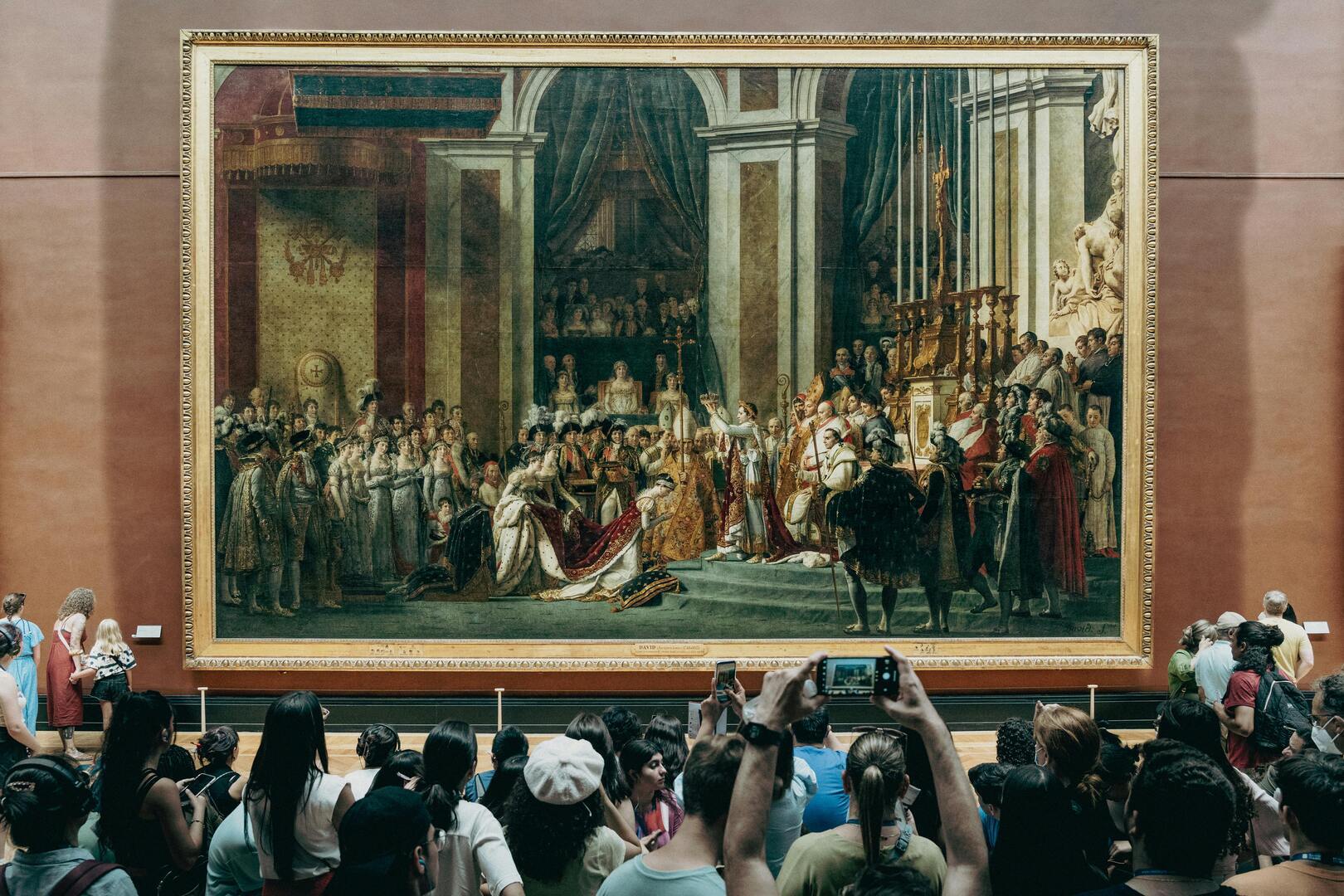
Beyond these three icons, essential works include Jacques-Louis David's The Coronation of Napoleon (Denon Wing, Room 702)—a vast canvas (6.21 x 9.79 meters) documenting Napoleon's self-coronation with documentary precision and political messaging. Eugène Delacroix's Liberty Leading the People (Denon Wing, Room 700) transforms the July Revolution into allegorical drama, the bare-breasted Liberty becoming France's revolutionary icon. Théodore Géricault's The Raft of the Medusa (Denon Wing, Room 700) confronts viewers with human suffering and survival, its dark Romanticism contrasting with Neoclassical restraint.
The Egyptian Antiquities department houses over 50,000 objects, with highlights including the Great Sphinx of Tanis, colossal pharaoh statues, and intricately carved sarcophagi. Near Eastern Antiquities feature the Code of Hammurabi—one of history's oldest legal documents—and Assyrian lamassu (winged bulls) that guarded palace gates. These collections illustrate civilizations that shaped human history, offering perspectives on art, law, religion, and daily life across millennia.
Recent Renovations and Gallery Updates
The Louvre continues its ongoing modernization program, with several galleries refreshed in 2025 and early 2026. The Richelieu Wing's French sculpture courtyards received updated lighting systems that enhance the natural illumination filtering through the glass roofs. The Egyptian Antiquities galleries underwent conservation work, with improved climate control and new display cases that better protect fragile artifacts while improving visibility. The Islamic Art galleries, relocated to the Denon Wing's lower level, now feature enhanced contextual information and multimedia displays that explain the collection's significance within broader art historical narratives.
The museum's infrastructure improvements include upgraded elevators, expanded restroom facilities, and new seating areas throughout galleries—acknowledging that museum fatigue is real and visitors need places to rest. The café and restaurant options have been expanded, with a new casual dining area in the Carrousel du Louvre offering quicker service for visitors with limited time. These practical enhancements, while less glamorous than new acquisitions, significantly improve the visitor experience, especially for those spending multiple hours exploring the collections.
Strategic Approaches to Navigating the Louvre
The Louvre's scale—15 kilometers of corridors, 35,000 displayed artworks—demands strategic planning. Attempting to see everything invites exhaustion and superficial engagement. Instead, choose collections that genuinely interest you, or follow one of the museum's suggested itineraries available on the app and website. The "Masterpieces in 90 Minutes" route hits the major icons efficiently, while thematic paths (Egyptian civilization, French painting, Italian Renaissance) allow deeper exploration.
Timing significantly impacts your experience. Early morning (9:00–10:00 a.m.) offers thinner crowds at the Mona Lisa and other popular works. Wednesday and Friday evenings (when the museum stays open until 9:45 p.m.) provide relative calm, with fewer tour groups and softer lighting that enhances viewing. Midday (12:00–3:00 p.m.) tends to be busiest, especially during peak tourist seasons. If you're visiting during summer, consider the evening hours—the cooler temperatures and reduced crowds make for a more pleasant experience.
Use alternative entrances strategically. While the Pyramid entrance is iconic, lines there can be lengthy. The Carrousel du Louvre entrance (connected to the Palais Royal–Musée du Louvre Métro station) and Porte des Lions entrance often have shorter queues, especially if you've booked advance tickets. These entrances also provide direct access to different wings, allowing you to start your visit in less crowded areas before moving toward popular galleries.
Take breaks. Museum fatigue is real, and the Louvre's cafés and restaurants provide necessary respites. The museum allows re-entry with your ticket, so you can step outside to the Tuileries Gardens for fresh air before continuing. Many visitors find that splitting their visit across two days—focusing on different collections each day—provides more satisfying engagement than attempting to see everything in one marathon session.
Crafting Your Louvre Experience
A well-planned Louvre visit balances iconic masterpieces with personal interests and practical considerations. Start by identifying your priorities: Are you drawn to ancient civilizations, Renaissance painting, French history, or specific artists? The museum's app and website offer pre-planned itineraries, but creating your own path based on genuine curiosity provides more meaningful engagement.
For first-time visitors, a logical flow might begin with the Denon Wing's Italian paintings (including the Mona Lisa), then move to Greek and Roman antiquities (Venus de Milo, Winged Victory), followed by French painting galleries. The Egyptian Antiquities, housed primarily in the Sully Wing, require significant time if you want to explore them thoroughly—consider dedicating a separate visit or at least 90 minutes to this collection. The Richelieu Wing's French sculpture courtyards, with their glass-roofed spaces and natural light, offer a different aesthetic experience that contrasts beautifully with the more intimate painting galleries.
The surrounding area extends your cultural exploration. The Jardin des Tuileries, immediately west, provides formal French gardens perfect for post-museum reflection. The Palais Royal, north of the Louvre, encloses peaceful gardens and elegant arcades. Crossing the Seine via Pont des Arts leads to the Left Bank and the Musée d'Orsay, whose Impressionist collection chronologically continues where the Louvre's ends. These nearby sites allow you to create a full-day cultural immersion, balancing the Louvre's encyclopedic scope with other Parisian experiences.
Experience This Attraction With Our Tours
One Journey offers curated approaches to the Louvre that transform what might be overwhelming into coherent, engaging experiences. Each tour recognizes that the museum's vastness requires guidance to navigate meaningfully, and that different visitors seek different connections with art and history.
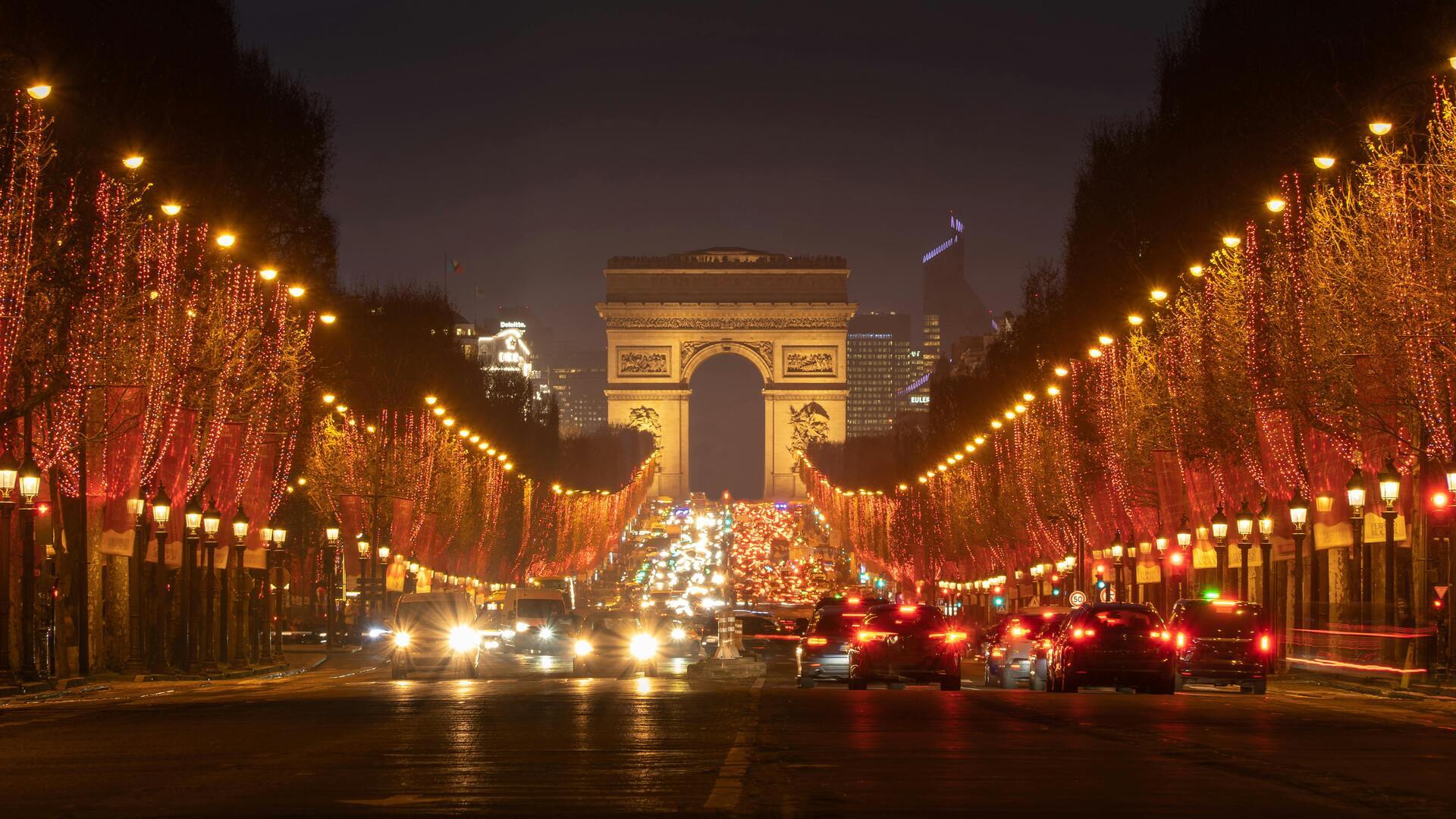
Louvre: Art and Pop Culture reimagines museum viewing through a contemporary lens. This guided experience connects the Louvre's classical masterpieces to modern films, music videos, fashion, and cultural references. Beginning with a mini walking tour around the museum's exterior—the Axe Historique stretching toward the Arc de Triomphe, the Tuileries Gardens, celebrity sightings along the Champs-Élysées—the tour contextualizes the Louvre within Parisian iconography. Your guide provides timed entry tickets for optimal access, then equips you with an exclusive "Pop Culture In The Louvre" itinerary identifying artworks featured in music videos, films, and contemporary media. This self-guided portion (approximately 3 hours) allows exploration at your own pace while hitting Instagram-worthy hotspots. The tour appeals to those who appreciate art but seek connections beyond traditional art-historical frameworks, recognizing that the Mona Lisa exists simultaneously as Renaissance innovation and global pop culture phenomenon.
Napoleon's Legacy situates the Louvre within the Emperor's broader impact on Paris's urban landscape. This walking tour traces Napoleonic monuments throughout the city: Place Vendôme's column celebrating military victories, Rue de Rivoli named after an Italian campaign, the Arc de Triomphe du Carrousel. At the Louvre, your guide explains how Napoleon expanded the museum's collection through military conquest—Italian Renaissance paintings, Egyptian antiquities, Flemish masterworks—and briefly renamed it the Musée Napoléon. The tour continues to Les Invalides, where Napoleon's tomb rests beneath the gilded dome, with entry included to the Army Museum's extensive military collections. For history enthusiasts, particularly those interested in how one figure reshaped a capital city's architecture and cultural institutions, this tour provides cohesive narrative linking monuments often visited in isolation.
Cinema Magic explores Paris as film location, and the Louvre appears prominently in cinematic history. From The Da Vinci Code's thriller-driven race through galleries to Wonder Woman's action sequences, from French New Wave directors capturing the museum's architectural beauty to documentaries exploring its collections, the Louvre has served as set, symbol, and subject. This three-hour walking tour visits filming locations throughout Paris, and the Louvre's exterior—particularly Pei's pyramid—features as one of cinema's most recognizable Parisian landmarks. Your guide shares behind-the-scenes stories, shows film clips against real-life backdrops, and explains how directors frame the museum to convey artistic prestige, French cultural identity, or simply stunning architecture. For film lovers, this perspective reveals how the Louvre transcends its museum function to become character in Paris's cinematic narrative.
These tours recognize that the Louvre holds multiple identities: artistic treasury, architectural palimpsest, Napoleonic legacy, pop culture icon, cinematic backdrop. One Journey's guides provide expertise that helps visitors move beyond the crowds surrounding the Mona Lisa to discover personal connections with art, history, and the museum's layered significance.
Is It Worth Visiting?
Absolutely. The Louvre represents one of humanity's most ambitious attempts to gather, preserve, and share artistic achievement across civilizations and millennia. Its collection spans 9,000 years—from Mesopotamian cylinder seals to Delacroix's revolutionary paintings—offering perspectives on what humans have valued, believed, and created throughout recorded history. Beyond specific masterpieces, the museum itself embodies cultural evolution: medieval fortress transformed into Renaissance palace, royal treasury opened to the public during Revolution, Napoleonic plunder reluctantly returned yet still comprising encyclopedic range, 20th-century pyramid crowning centuries of architecture.
Yes, crowds gather around the Mona Lisa. Yes, the scale can overwhelm. But the Louvre rewards strategic visits with moments of unexpected connection: a Roman sarcophagus carved with astonishing delicacy, French sculpture gleaming under the Richelieu Wing's glass roof, the Winged Victory's dramatic positioning at the top of the Daru staircase. Even spending hours there merely scratches the surface, which is precisely the point—the Louvre invites return visits, each revealing layers previously unnoticed, each reinforcing that eight centuries of accumulation cannot be absorbed in a day. With the 2026 updates improving accessibility, digital resources, and visitor flow, there's never been a better time to experience this essential Parisian institution.
Traveler's Questions
How much time should I spend at the Louvre in 2026?
Most visitors allocate 3–4 hours, which allows focused exploration of major highlights without exhaustion. Attempting to see everything is unrealistic—the museum displays 35,000 objects across 15 kilometers of galleries. First-time visitors typically prioritize the Mona Lisa, Venus de Milo, Winged Victory, and selected galleries (Egyptian, Greek, French painting). Return visitors often explore specific departments or periods in depth. The museum's scale rewards strategic planning: choose collections that genuinely interest you rather than rushing through obligation. Museum fatigue is real; quality engagement with fewer works provides more satisfaction than superficial glimpses of everything.
Do I need to book tickets in advance for 2026?
Yes, advance online booking is mandatory. The Louvre no longer sells tickets at the door, and daily capacity limits mean popular time slots sell out weeks in advance, especially during peak tourist seasons (spring through fall) and holidays. Advance tickets also allow you to choose less crowded time slots and use alternative entrances (Carrousel du Louvre or Porte des Lions) that often have shorter lines than the Pyramid entrance. Tickets are timed, so arrive within your designated window. Free admission days (first Sunday of each month) require online reservation even though entry is free, and these days attract significant crowds.
What are the best strategies for seeing the Mona Lisa in 2026?
Arrive at museum opening (9:00 a.m.) or visit during evening hours (Wednesday or Friday evenings when the museum is open until 9:45 p.m.). The Mona Lisa is housed in the Denon Wing's Salle des États; signage throughout the museum directs you there. Expect crowds and protective barriers—the painting is displayed behind glass at a distance from viewers. Visiting early morning or late evening reduces (but doesn't eliminate) crowds. Spend time with other works in the same room, particularly Veronese's Wedding Feast at Cana, which receives less attention but rewards contemplation. Consider that the Mona Lisa's fame derives partly from its history and Leonardo's technique; viewing it fulfills cultural curiosity but the Louvre holds countless less-crowded masterpieces.
What's new at the Louvre in 2026?
Key updates include mandatory advance online booking (no same-day ticket sales), expanded digital resources including an app with augmented reality features and real-time crowd density indicators, enhanced accessibility with improved wheelchair access routes and sign language tours, "quiet hours" on select Wednesday evenings for a more contemplative experience, upgraded infrastructure including new elevators and expanded restroom facilities, and several gallery renovations with improved lighting and display cases. The museum continues its modernization program while maintaining its essential character as the world's largest art museum.
Are guided tours worth it, or should I explore independently?
Both approaches have merit. Guided tours (including One Journey's offerings) provide expert context, strategic routing that maximizes time efficiency, skip-the-line access, and interpretation that connects artworks to broader historical and cultural narratives. They're particularly valuable for first-time visitors or those interested in specific themes (Napoleon's influence, pop culture connections, architectural history). Independent exploration allows personal pacing, freedom to linger where interest strikes, and flexibility to skip crowded galleries. Many visitors combine approaches: joining a guided tour for orientation and highlights, then returning independently to explore specific collections in depth. The Louvre's free maps and rental audio guides support independent visits.
For guided Louvre tours, pop culture explorations, Napoleonic walking tours, and personalized Parisian museum experiences, contact our Tour Concierge at support@onejourneytours.com.